Cardboad Chronicles
Cardboad Chronicles
overview
overview
Trailer for final Release!
Trailer for final Release!
Slam! Explore! Pet DOgs! Go Around the magical town of doodleburg to save the world from being flattened by an alien threat!
Slam! Explore! Pet DOgs! Go Around the magical town of doodleburg to save the world from being flattened by an alien threat!
Role
Design Lead + Technical Designer
Engine
Unreal Engine 4.27/5
Duration
6 months
Team Size
13 People
Platforms


Cardboard Chronicles is my Master Thesis released on the Nintendo Switch for my Master's at the University of Utah.
Quick Impact Highlights
Gray Boxed and Polished Main Hub and Farm Levels
Built reusable FMV cutscene pipeline to replace costly animations.
Designed NPC persistence system to reflect progress across sessions.
Scoped project from 5 worlds → 2 levels + hub → shipped on Nintendo Switch.
Mediated design–engineering conflicts with structured docs/pipelines.
Cardboard Chronicles is my Master Thesis released on the Nintendo Switch for my Master's at the University of Utah.
Quick Impact Highlights
Gray Boxed and Polished Main Hub and Farm Levels
Built reusable FMV cutscene pipeline to replace costly animations.
Designed NPC persistence system to reflect progress across sessions.
Scoped project from 5 worlds → 2 levels + hub → shipped on Nintendo Switch.
Mediated design–engineering conflicts with structured docs/pipelines.
my roles
my roles
my roles
Technical Designer
Technical Designer
Technical Designer

Cutscene Implementation and Changes Based on Whack A Mole System
Dynamic NPC Interactions
Designed interaction logic for 11 NPCs that updated with player progress.
Reasoning: Static dialogue felt dead, so I pushed for persistence systems that showed growth and reinforced the narrative theme of “impact on the world.”
Tradeoff: Couldn’t update every NPC, so I prioritized the Mayor and Pigskin (high narrative + emotional payoff).
Narrative-Heavy Town Center Area
Owned the hub’s dialogue trees, progression checks, and character positioning.
Reasoning: The town was the emotional anchor of the game, so I ensured pacing felt natural and story progression never conflicted with gameplay states.
Tradeoff: Required cutting a more ambitious time-loop system, but resulted in a tighter, more accessible player experience.
Dynamic NPC Interactions
Designed interaction logic for 11 NPCs that updated with player progress.
Reasoning: Static dialogue felt dead, so I pushed for persistence systems that showed growth and reinforced the narrative theme of “impact on the world.”
Tradeoff: Couldn’t update every NPC, so I prioritized the Mayor and Pigskin (high narrative + emotional payoff).
Created UI Systems for Health and Mini-Games
Created a flipbook-based health bar and a Whack-a-Mole mini-game interface.
Reasoning: A flat, stylized UI matched the cardboard aesthetic and was easier to implement than 3D widgets, giving us more time to polish mechanics.
Tradeoff: Less flashy than a 3D UI, but aligned perfectly with theme + scope.
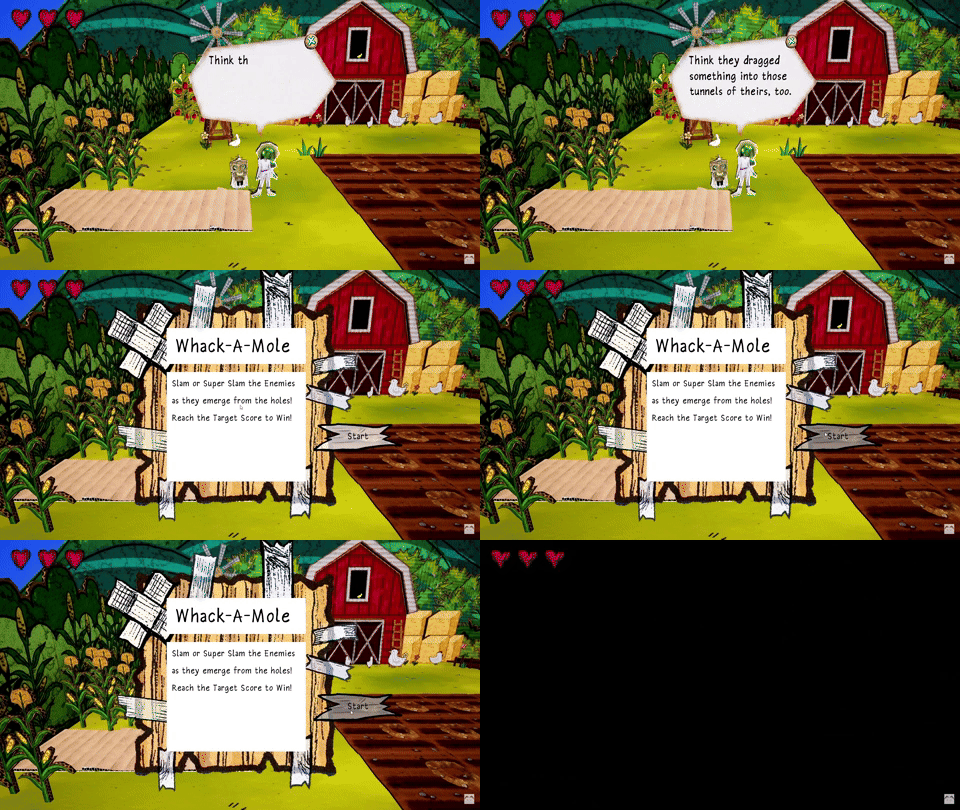
Whack - A- Mole and Health UI
Integrating Puzzle, Dialogue, and Combat Systems
Unified different systems into a smooth, yet exciting flow
Reasoning: To make use of all the systems, they needed to communicate with each other which I did through Blueprints
Tradeoff: Some parts had to be more linear than others especially for bigger story moments.
Created UI Systems for Health and Mini-Games
Created a flipbook-based health bar and a Whack-a-Mole mini-game interface.
Reasoning: A flat, stylized UI matched the cardboard aesthetic and was easier to implement than 3D widgets, giving us more time to polish mechanics.
Tradeoff: Less flashy than a 3D UI, but aligned perfectly with theme + scope.
Dynamic NPC Interactions
Designed interaction logic for 11 NPCs that updated with player progress.
Reasoning: Static dialogue felt dead, so I pushed for persistence systems that showed growth and reinforced the narrative theme of “impact on the world.”
Tradeoff: Couldn’t update every NPC, so I prioritized the Mayor and Pigskin (high narrative + emotional payoff).
Created UI Systems for Health and Mini-Games
Created a flipbook-based health bar and a Whack-a-Mole mini-game interface.
Reasoning: A flat, stylized UI matched the cardboard aesthetic and was easier to implement than 3D widgets, giving us more time to polish mechanics.
Tradeoff: Less flashy than a 3D UI, but aligned perfectly with theme + scope.

Cutscene System
Flexible FMV Cutscene
Built a video playback system with skip detection
Reasoning: Animation resources were stretched thin, so I used FMVs to deliver cutscenes and playful moments (like dog-petting) without extra rigging or animation.
Tradeoff: Sacrificed custom animations, but gained a reusable, scalable pipeline that worked across cutscenes and Nintendo Switch hardware.
Dynamic NPC Interactions
Designed interaction logic for 11 NPCs that updated with player progress.
Reasoning: Static dialogue felt dead, so I pushed for persistence systems that showed growth and reinforced the narrative theme of “impact on the world.”
Tradeoff: Couldn’t update every NPC, so I prioritized the Mayor and Pigskin (high narrative + emotional payoff).
Created UI Systems for Health and Mini-Games
Created a flipbook-based health bar and a Whack-a-Mole mini-game interface.
Reasoning: A flat, stylized UI matched the cardboard aesthetic and was easier to implement than 3D widgets, giving us more time to polish mechanics.
Tradeoff: Less flashy than a 3D UI, but aligned perfectly with theme + scope.
Design Lead
Design Lead
Design Lead
Scoped and Redesigned the Game Mid-Production
Cut from 5 large worlds → 2 levels + 1 hub.
Reasoning: A tighter scope would allow us to finish strong and highlight the mechanics that playtesters enjoyed most.
Tradeoff: Lost some narrative scale, but gained polish, coherence, and a game we could ship.
Cross-Disciplinary Leadership & Mediation
Ran syncs, mediated designer–engineer conflicts.
Reasoning: Misalignment was burning time. By clarifying pipelines and compromises, we kept production moving.
Tradeoff: Took extra time from my own implementation work, but saved the team far more by reducing bottlenecks
Documented Systems and Pipelines
Authored clear design docs with dependencies, assets, and engineering needs.
Reasoning: With turnover and clashing priorities, docs kept everyone aligned and reduced rework.
Tradeoff: Documentation took time, but avoided repeated miscommunications that slowed development.
Motivated Designers with Creative Constraints
Introduced Joy-Con–centric mechanics as creative constraints.
Reasoning: Constraints helped the team focus on feasible, Switch-ready ideas and avoided complex one time mechanics that wouldn’t fit.
Tradeoff: Limited mechanic variety, but boosted creativity and relevance for our platform
Designed Overall Flow of the Game
Mapped story beats, gameplay moments, and pacing. Breaking down level sequence flow and even implementing the main hub and farm levels
Reasoning: Our game felt fragmented; I wanted players to experience a clear arc of tension, humor, and payoff.
Tradeoff: Some branching narrative concepts were cut, but players got a more coherent emotional journey.
Scoped and Redesigned the Game Mid-Production
Cut from 5 large worlds → 2 levels + 1 hub.
Reasoning: A tighter scope would allow us to finish strong and highlight the mechanics that playtesters enjoyed most.
Tradeoff: Lost some narrative scale, but gained polish, coherence, and a game we could ship.
Cross-Disciplinary Leadership & Mediation
Ran syncs, mediated designer–engineer conflicts.
Reasoning: Misalignment was burning time. By clarifying pipelines and compromises, we kept production moving.
Tradeoff: Took extra time from my own implementation work, but saved the team far more by reducing bottlenecks
Documented Systems and Pipelines
Authored clear design docs with dependencies, assets, and engineering needs.
Reasoning: With turnover and clashing priorities, docs kept everyone aligned and reduced rework.
Tradeoff: Documentation took time, but avoided repeated miscommunications that slowed development.
Motivated Designers with Creative Constraints
Introduced Joy-Con–centric mechanics as creative constraints.
Reasoning: Constraints helped the team focus on feasible, Switch-ready ideas and avoided complex one time mechanics that wouldn’t fit.
Tradeoff: Limited mechanic variety, but boosted creativity and relevance for our platform
Designed Overall Flow of the Game
Mapped story beats, gameplay moments, and pacing. Breaking down level sequence flow and even implementing the main hub and farm levels
Reasoning: Our game felt fragmented; I wanted players to experience a clear arc of tension, humor, and payoff.
Tradeoff: Some branching narrative concepts were cut, but players got a more coherent emotional journey.

Major Areas in Final Game
Major Areas in Final Game
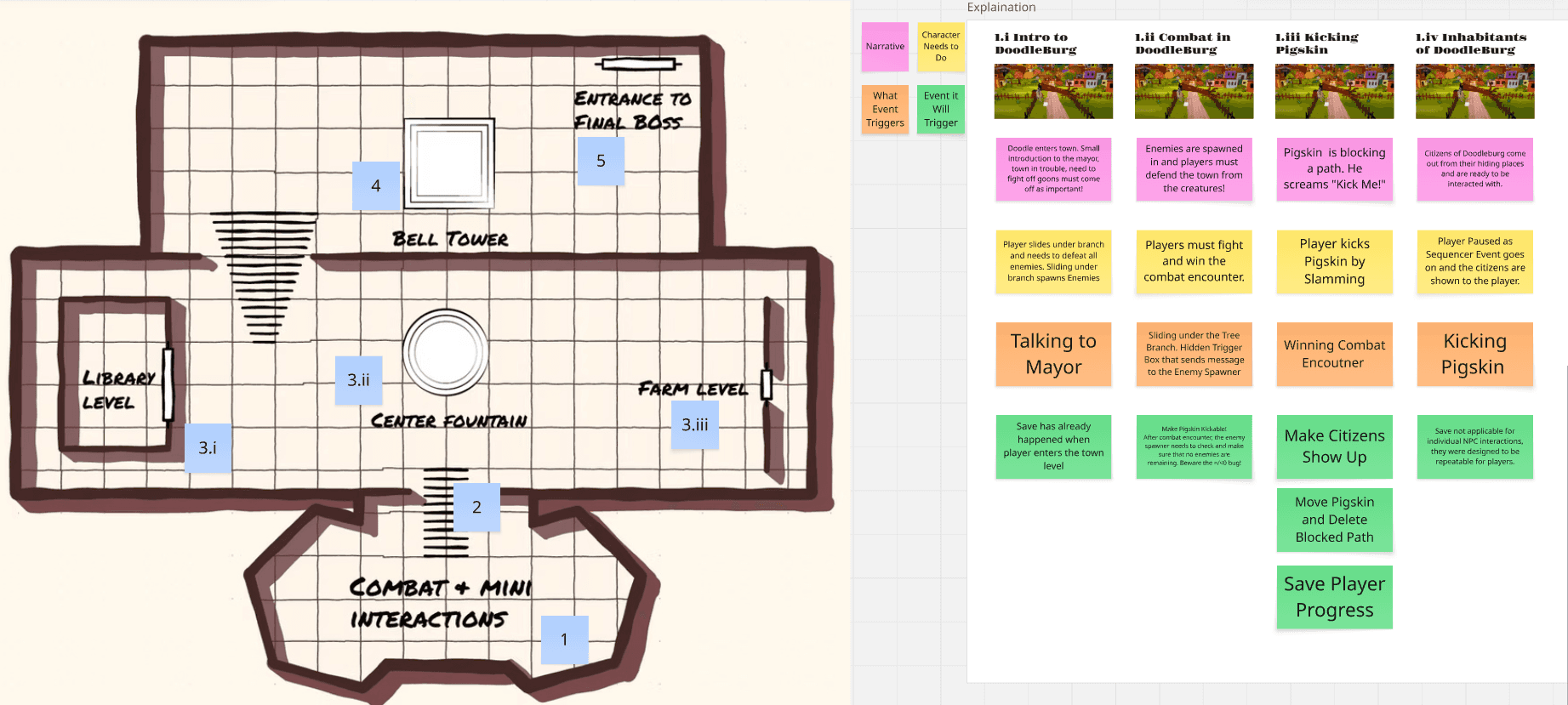
Level Breakdowns
Level Breakdowns
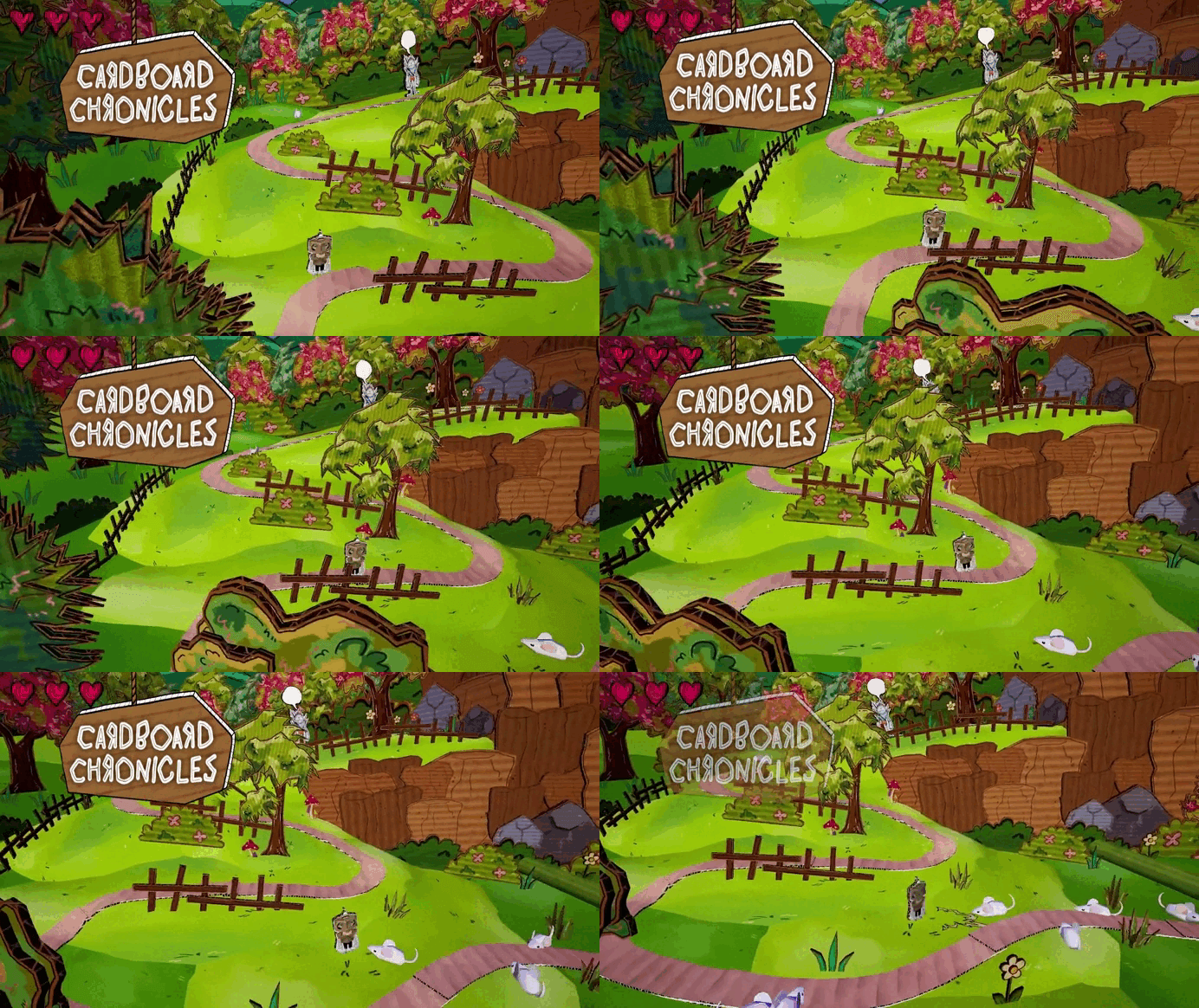
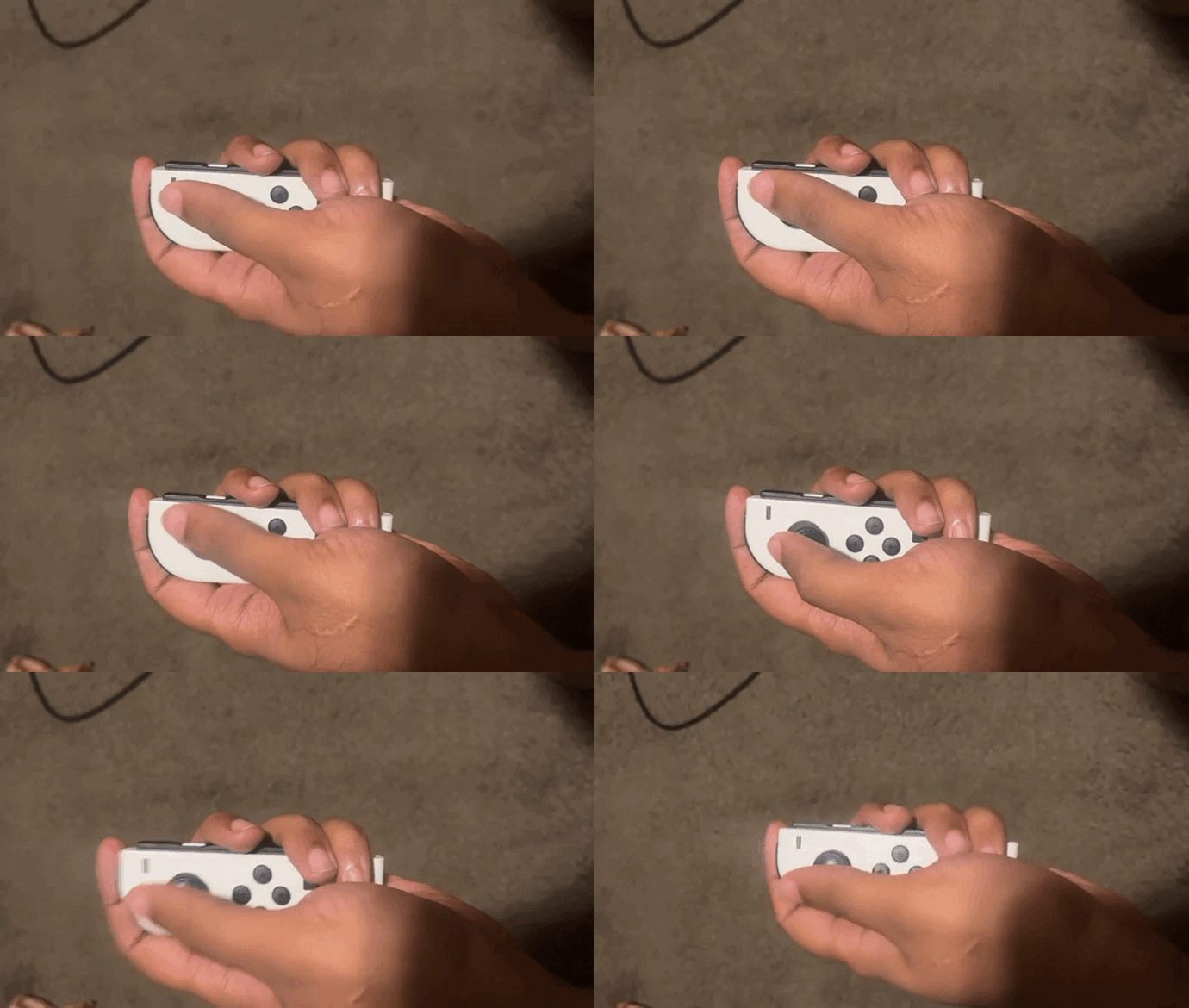
Joy-Con Interactions are Introduced
Joy-Con Interactions are Introduced
Post Mortem
Reflections from shipping Cardboard Chronicles on Switch, navigating unexpected engine downgrade + design tradeoffs
✅Achievements
Shipped on Nintendo Switch despite an unexpected engine downgrade from UE5 → UE4.27.
Delivered memorable mechanics (FMV dog petting, dynamic NPC updates) praised by playtesters.
Strengthened team cohesion through structured pipelines and conflict mediation.
✅Achievements
Shipped on Nintendo Switch despite an unexpected engine downgrade from UE5 → UE4.27.
Delivered memorable mechanics (FMV dog petting, dynamic NPC updates) praised by playtesters.
Strengthened team cohesion through structured pipelines and conflict mediation.
✅Achievements
Shipped on Nintendo Switch despite an unexpected engine downgrade from UE5 → UE4.27.
Delivered memorable mechanics (FMV dog petting, dynamic NPC updates) praised by playtesters.
Strengthened team cohesion through structured pipelines and conflict mediation.
⚠️ Challenges
Engine Downgrade Cut Dev Time in Half
Solution: Cut superfluous mechanics and carefully greenlit only what aligned with the core vision.
Limited Switch Documentation & Support
Solution: Focused on simple, standout interactions while cutting unpolished mechanics.
Younger Audience Complexity
Soultion: Replaced written surveys with real-time observations and quick playtest questions.
Team Dynamic Clashes
Soultion: Used mediation, conflict resolution, and compromise to maintain cohesion and progress.
⚠️ Challenges
Development time was cut nearly in half due to an unexpected engine downgrade (from Unreal Engine 5 to 4.2) after receiving the Switch Dev Kit, which required reworking core systems.
Solution: d
Limited documentation and support for the Nintendo Switch with Unreal Engine created frequent roadblocks, leading to a development process driven by trial and error.
Designing for a younger target audience proved more complex than anticipated. Kids struggled with traditional written surveys, prompting us to adapt by taking real-time observations and asking brief questions during play.
Team dynamic issues emerged, with strong personalities occasionally clashing. This required active mediation, conflict resolution, and compromise to keep the project moving forward and maintain team cohesion.
⚠️ Challenges
Development time was cut nearly in half due to an unexpected engine downgrade (from Unreal Engine 5 to 4.2) after receiving the Switch Dev Kit, which required reworking core systems.
Solution: Looking at the game and cutting down superfluous mechanics that didn't gel well with the overall concept or would require too much time to polish to an acceptable state. Being careful with what was greenlit and what wasn't.
Limited documentation and support for the Nintendo Switch with Unreal Engine created frequent roadblocks, leading to a development process driven by trial and error.
Solution: For Nintendo Switch specific mechanics, we decided to focus on interactions that made players feel like the Nintendo Switch version stood out while keeping it simple enough that they were easy to implement like reading the color of Joy-Cons or replacing button presses. As much as we wanted to make Switch specific mechanics, we didn't have the time to figure out and polish said mechanics leading them to be cut.
Designing for a younger target audience proved more complex than anticipated.
Soultion: Kids struggled with traditional written surveys, prompting us to adapt by taking real-time observations and asking brief questions during play.
Team dynamic issues emerged, with strong personalities occasionally clashing.
Soultion: This required active mediation, conflict resolution, and compromise to keep the project moving forward and maintain team cohesion.
📘Takeaways
Scope early, cut ruthlessly, and pivot when necessary.
Small, tactile interactions often deliver the biggest emotional payoff.
Good design leadership means balancing creativity with feasibility—and keeping every voice on the team heard.
📘Takeaway
Scope early, cut ruthlessly, and pivot when necessary.
Small, tactile interactions often deliver the biggest emotional payoff.
Good design leadership means balancing creativity with feasibility—and keeping every voice on the team heard.
📘Takeaways
Scope early, cut ruthlessly, and pivot when necessary.
Small, tactile interactions often deliver the biggest emotional payoff.
Good design leadership means balancing creativity with feasibility—and keeping every voice on the team heard.
Major Contributions - Deeper Dive
Major Contributions - Deeper Dive
Re-Design and Pivot
Re-Design and Pivot
Re-Design and Pivot
Objective
Transform a bloated, disjointed thesis project into a focused, shippable game for Nintendo Switch.
Observed Issues
Scope creep: 5 worlds planned, only 3 partially complete by semester end.
Fragmented mechanics: no synergy, “prototype soup” without a unifying vision.
Team friction: design vs. engineering priorities clashing, slowing progress.
Lack of identity: project was ambitious but didn’t have a strong creative core.
Restraints
Limited dev time (engine downgrade UE5 → UE4.27 cut schedule nearly in half).
Large team of 13 students with varying skill levels.
Nintendo Switch hardware limitations.
Proposed Solution
Cut scope → reduce from 5 worlds to 2 levels + 1 hub.
Establish a “smaller world, denser design” philosophy (inspired by Yakuza 0).
Prioritize mechanics that playtesters enjoyed (Joy-Con interactions, NPC persistence).
Introduce clear pipelines + documentation to resolve design/engineering friction.
Position hub town as emotional anchor to unify story + gameplay. Progress was slow, and the project lacked a clear identity or achievable scope.
Outcome
Team was re-energized → clearer vision, achievable scope, reduced friction.
Production regained momentum, morale improved after cuts clarified direction.
Created a roadmap that shipped successfully on Nintendo Switch.
Recruiters & players praised “dog-petting FMV” and NPC persistence — features that only existed because of the redesign.
Design Process!
Design Process
assessing what we had
The Switch dev kit arrived, requiring us to shift engines from UE5 to UE 4.2. This transition gave us a natural pause to reassess.
I cataloged existing mechanics and narrative content and reviewed our “mechanics gym”—a test map containing all working interactions. We had some promising prototypes but no clear way they fit together.
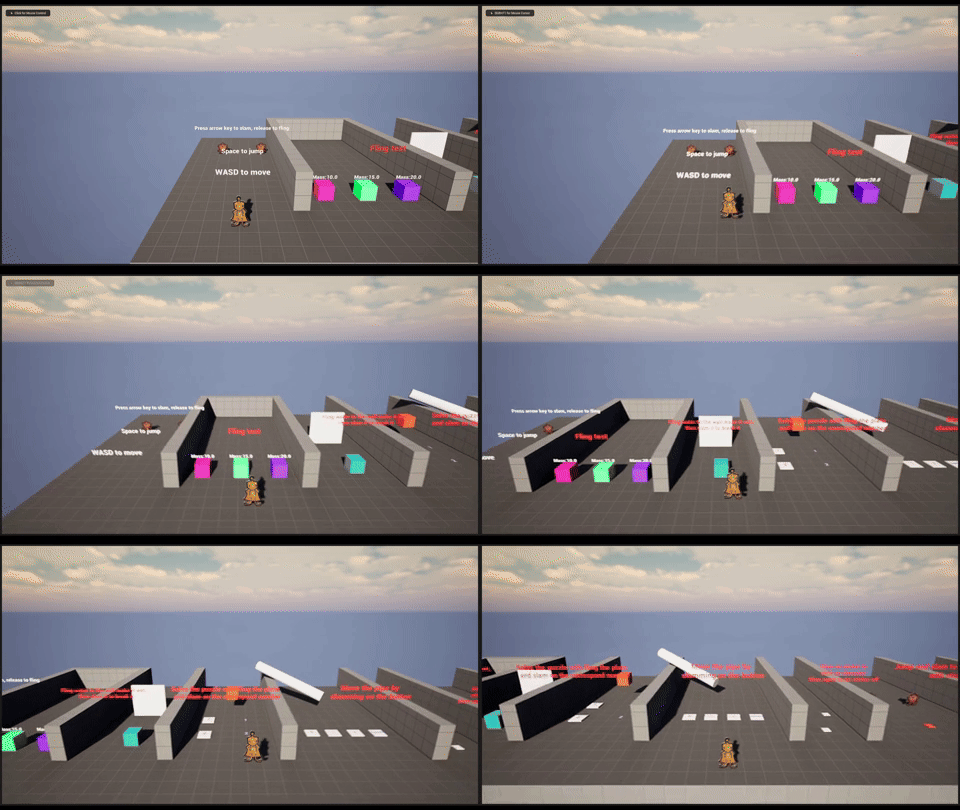
Gym with all of our mechanics
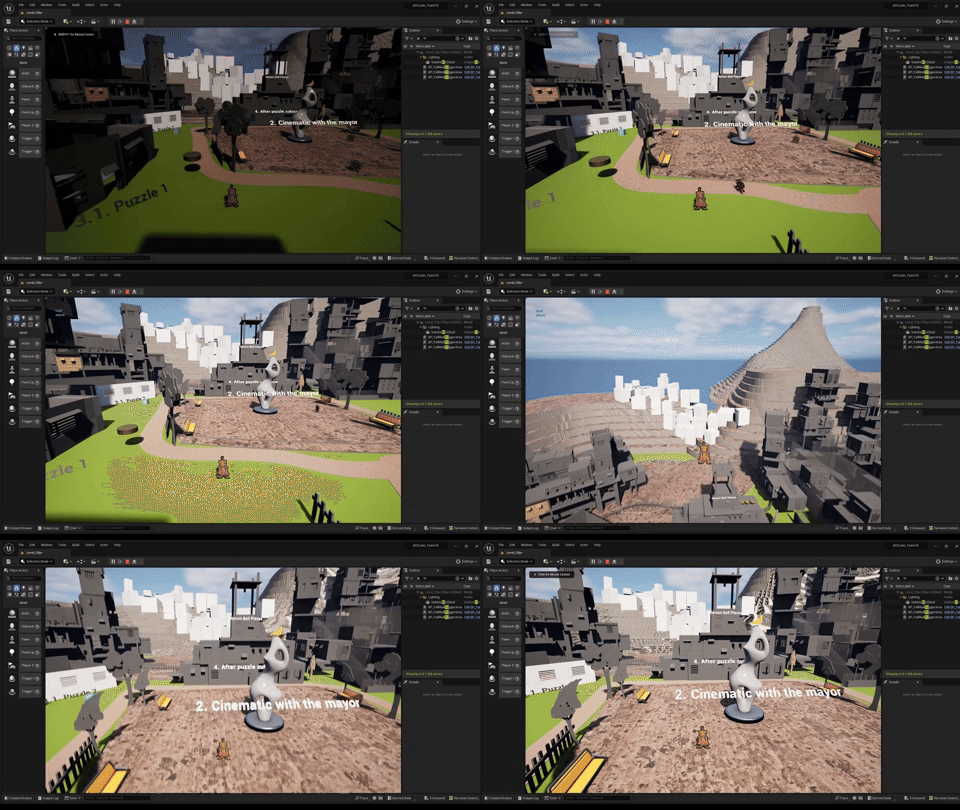
A “flip” mechanic was removed after it showed low designer engagement and potential.
A “flip” mechanic was removed after it showed low designer engagement and potential.
Cutting out Mechanics
To streamline the mechanic pool, I implemented a two-round evaluation system:
Round 1: Feasibility Check
If a mechanic was difficult to implement and had less than 5 unique cases I could think of in 30 minutes, it was cut.
Round 2: Engagement & Integration
I surveyed other designers: Had they used the mechanic in their work? Was it fun? Did it inspire further ideas?
If it didn’t excite the team or wasn’t integrated in earlier work, we dropped it.
This process helped us keep the strongest, most usable mechanics while minimizing scope creep.
Cutting out Mechanics
To streamline the mechanic pool, I implemented a two-round evaluation system:
Round 1: Feasibility Check
If a mechanic was difficult to implement and had less than 5 unique cases I could think of in 30 minutes, it was cut.
Round 2: Engagement & Integration
I surveyed other designers: Had they used the mechanic in their work? Was it fun? Did it inspire further ideas?
If it didn’t excite the team or wasn’t integrated in earlier work, we dropped it.
This process helped us keep the strongest, most usable mechanics while minimizing scope creep.
Designing New Mechanics
Knowing we were targeting Nintendo Switch, I designed simple, tactile mechanics that took advantage of Joy-Con motion and kid-friendly interactions. These were:
Easy to implement.
Engaging for our younger audience.
Small in scope, allowing for more polish time.
This constraint-driven design approach actually unlocked creativity across the team, with designers excited to create within these clearer boundaries.
Designing New Mechanics
Knowing we were targeting Nintendo Switch, I designed simple, tactile mechanics that took advantage of Joy-Con motion and kid-friendly interactions. These were:
Easy to implement.
Engaging for our younger audience.
Small in scope, allowing for more polish time.
This constraint-driven design approach actually unlocked creativity across the team, with designers excited to create within these clearer boundaries.
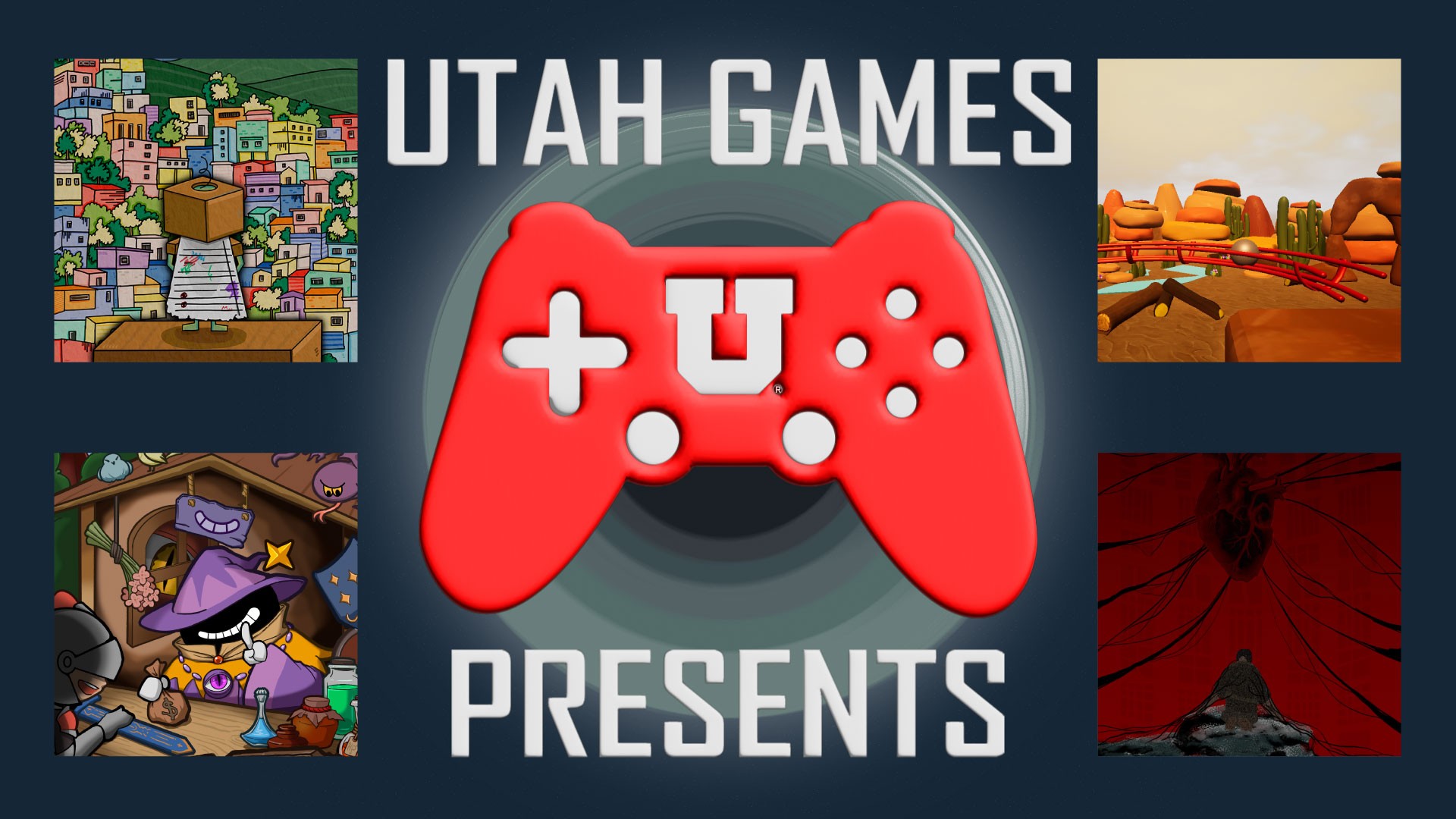
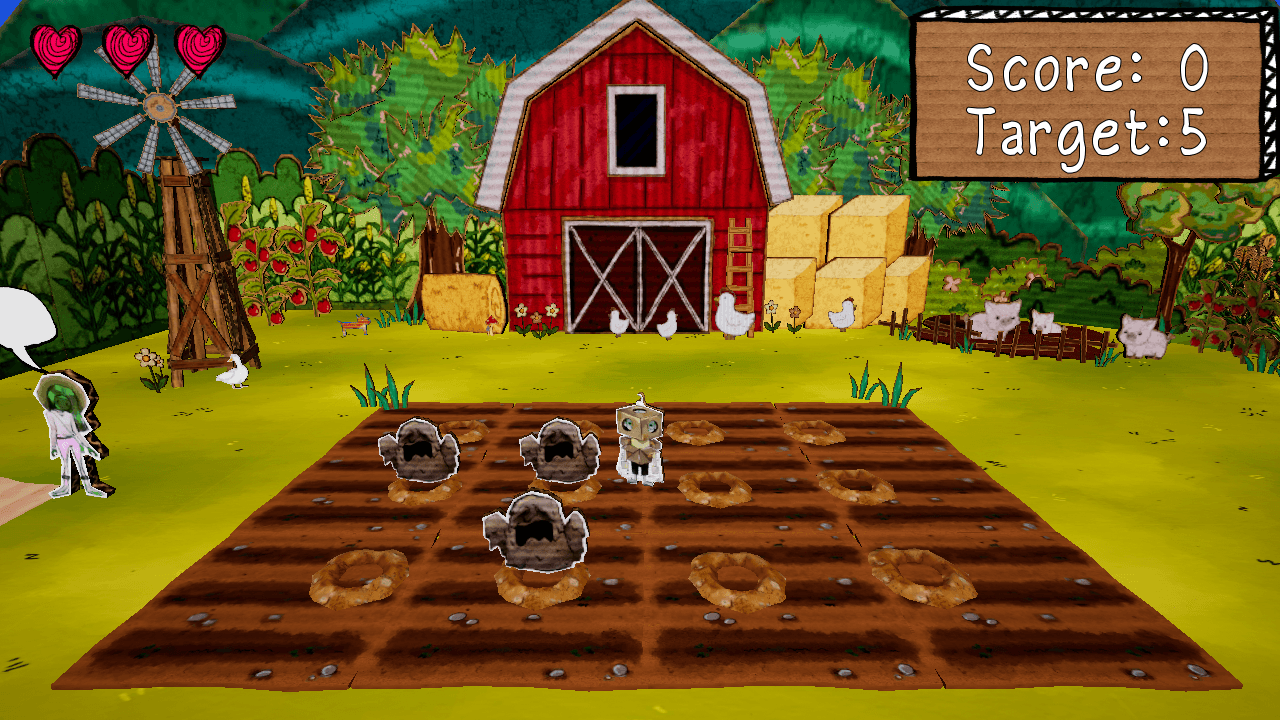
One of the Distinct Areas Used instead of Worlds
One of the Distinct Areas Used instead of Worlds
New Story
Originally, the story involved five expansive levels. While ambitious, it just wasn't feasible with time or dev skill.
I re-pitched the narrative to follow a “smaller world, denser design” philosophy—similar to Yakuza Zero. Instead of big open areas, we created tightly designed spaces rich in character and gameplay.
Initial plans to use time loops and three parallel stories were cut after discussing user retention risks with the team. We pivoted to three distinct areas with linear progression, which better supported replay ability and ease of development.
New Story
Originally, the story involved five expansive levels. While ambitious, it just wasn't feasible with time or dev skill.
I re-pitched the narrative to follow a “smaller world, denser design” philosophy—similar to Yakuza Zero. Instead of big open areas, we created tightly designed spaces rich in character and gameplay.
Initial plans to use time loops and three parallel stories were cut after discussing user retention risks with the team. We pivoted to three distinct areas with linear progression, which better supported replay ability and ease of development.
Dog Petting FMV
Dog Petting FMV

Objective: Deliver cutscenes that added humor and warmth without relying on resource-intensive custom animation.
Observed Issue: Animation team had no bandwidth for complex cutscenes, and Switch hardware created stability challenges
Restraints: Limited animation resources, Switch hardware playback quirks, need for skip functionality.
Proposed Solution: Create a reusable FMV pipeline that could power both cutscenes and playful moments.
Outcome: Shipped scalable FMV system for both cutscenes & humor beats. Memorable “dog-petting FMV” became a playtester favorite.
Design Process
Design Process
Pitching the Idea
Initially met with skepticism—narrative designers worried the FMV would be too jarring. However, informal polling showed many designers were intrigued, just unsure of its execution. I realized a prototype would be the best way to show—not tell—the mechanic’s potential.
Pitching the Idea
Initially met with skepticism—narrative designers worried the FMV would be too jarring. However, informal polling showed many designers were intrigued, just unsure of its execution. I realized a prototype would be the best way to show—not tell—the mechanic’s potential.

Prototyping the Idea
I made a quick version of the idea using Unreal's Media Player and with some help of a teammate and his dog. The video would be played when players interacted with the dog.
Prototyping the Idea
I made a quick version of the idea using Unreal's Media Player and with some help of a teammate and his dog. The video would be played when players interacted with the dog.
Playtesting
We observed players interact with the mechanic in internal playtests, noting:
Facial reactions (surprise, laughter)
Questions about the system
Perceived tone fit and immersion
Follow-up questions confirmed the feature felt cohesive and added emotional value.
Playtesting
We observed players interact with the mechanic in internal playtests, noting:
Facial reactions (surprise, laughter)
Questions about the system
Perceived tone fit and immersion
Follow-up questions confirmed the feature felt cohesive and added emotional value.
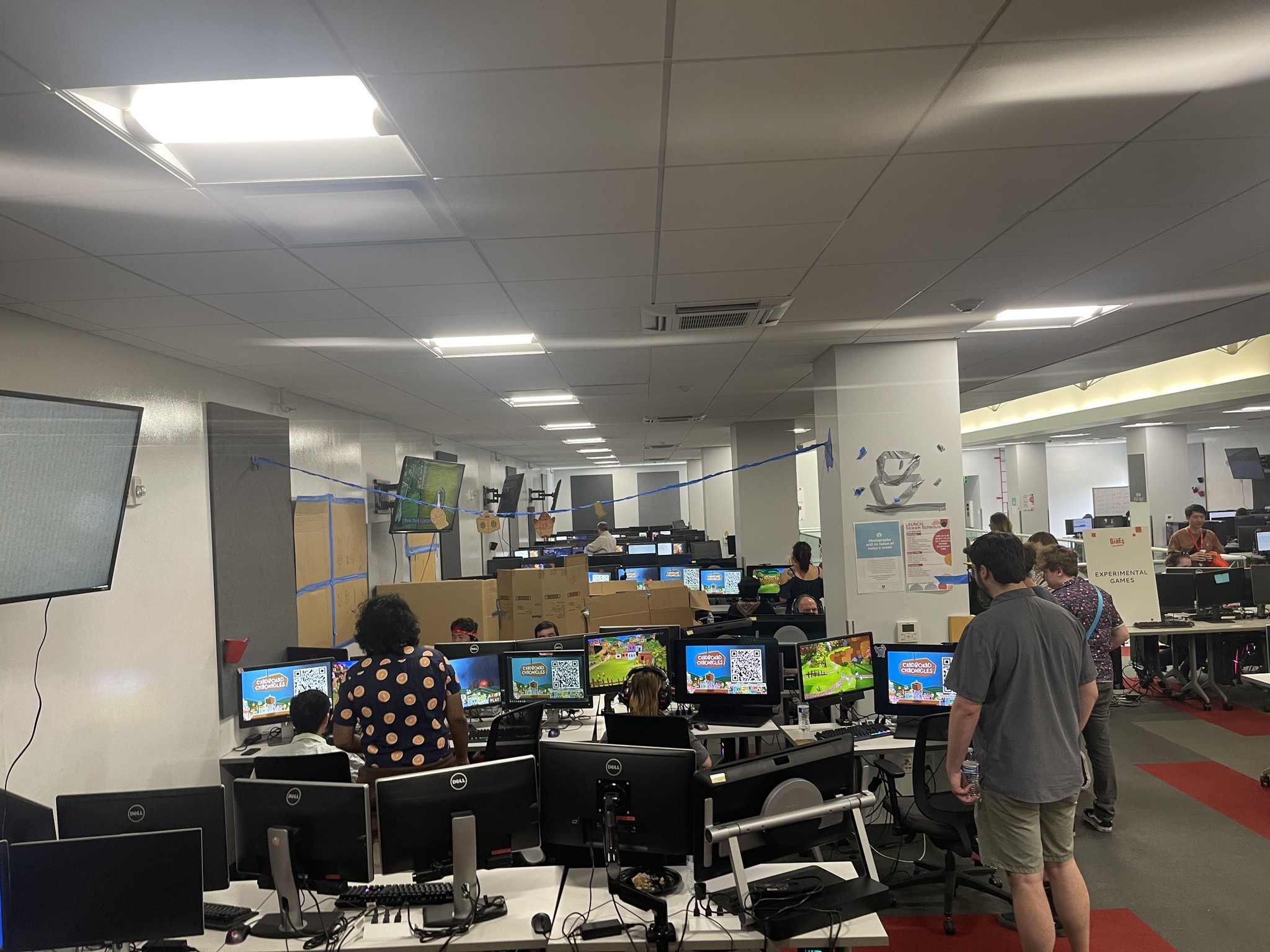
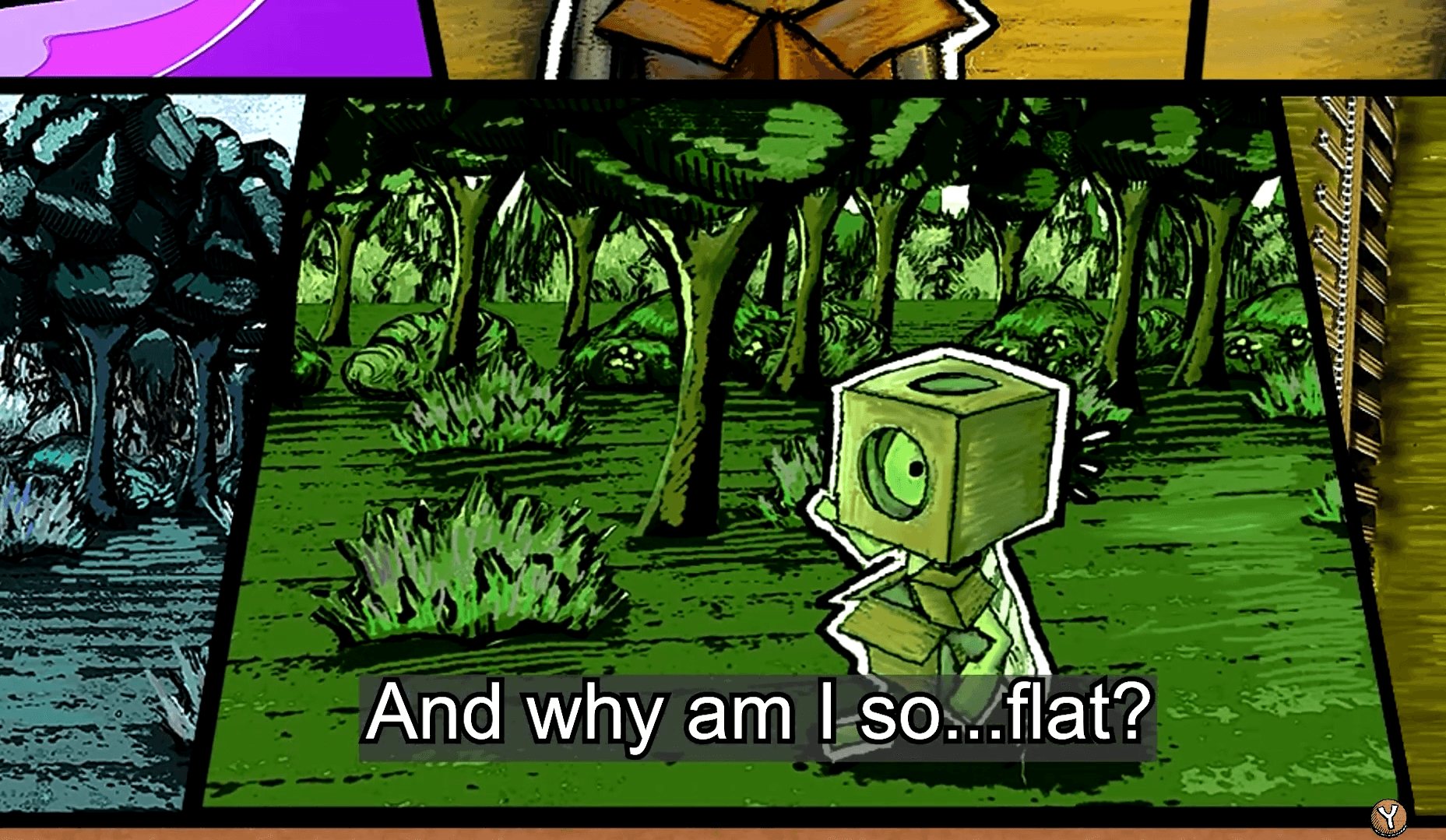
Cutscene using the same system for the dog petting, Pressing the Y Button meant skipping over the cutscene.
Cutscene using the same system for the dog petting, Pressing the Y Button meant skipping over the cutscene.
Polishing
Polishing the Mechanic
Issue: Players could accidentally retrigger the FMV or spam it.
Fix: Disabled player movement during playback, added a check to prevent overlapping videos, and ensured clean transitions.
Expanded to Cutscenes
The same FMV system was adapted for in-game cutscenes. I implemented a skip function using a long button press (vs. a single press) to ensure player intent and avoid accidental skips—vital for repeat playthroughs.
Polishing
Polishing the Mechanic
Issue: Players could accidentally retrigger the FMV or spam it.
Fix: Disabled player movement during playback, added a check to prevent overlapping videos, and ensured clean transitions.
Expanded to Cutscenes
The same FMV system was adapted for in-game cutscenes. I implemented a skip function using a long button press (vs. a single press) to ensure player intent and avoid accidental skips—vital for repeat playthroughs.
Optimization
Unreal’s Media Player had significant issues on Switch:
Videos failed to load or showed a grey screen.
The blueprint’s random video selection was unstable on hardware.
Solution:
Replaced random video system with a single clip to reduce load and asset calls.
Ultimately rebuilt the entire system using Unreal’s Electra Player, which resolved compatibility issues and allowed for playback, skip functionality, and reuse across different FMV moments.
Optimization
Unreal’s Media Player had significant issues on Switch:
Videos failed to load or showed a grey screen.
The blueprint’s random video selection was unstable on hardware.
Solution:
Replaced random video system with a single clip to reduce load and asset calls.
Ultimately rebuilt the entire system using Unreal’s Electra Player, which resolved compatibility issues and allowed for playback, skip functionality, and reuse across different FMV moments.
Optimization
Unreal’s Media Player had significant issues on Switch:
Videos failed to load or showed a grey screen.
The blueprint’s random video selection was unstable on hardware.
Solution:
Replaced random video system with a single clip to reduce load and asset calls.
Ultimately rebuilt the entire system using Unreal’s Electra Player, which resolved compatibility issues and allowed for playback, skip functionality, and reuse across different FMV moments.
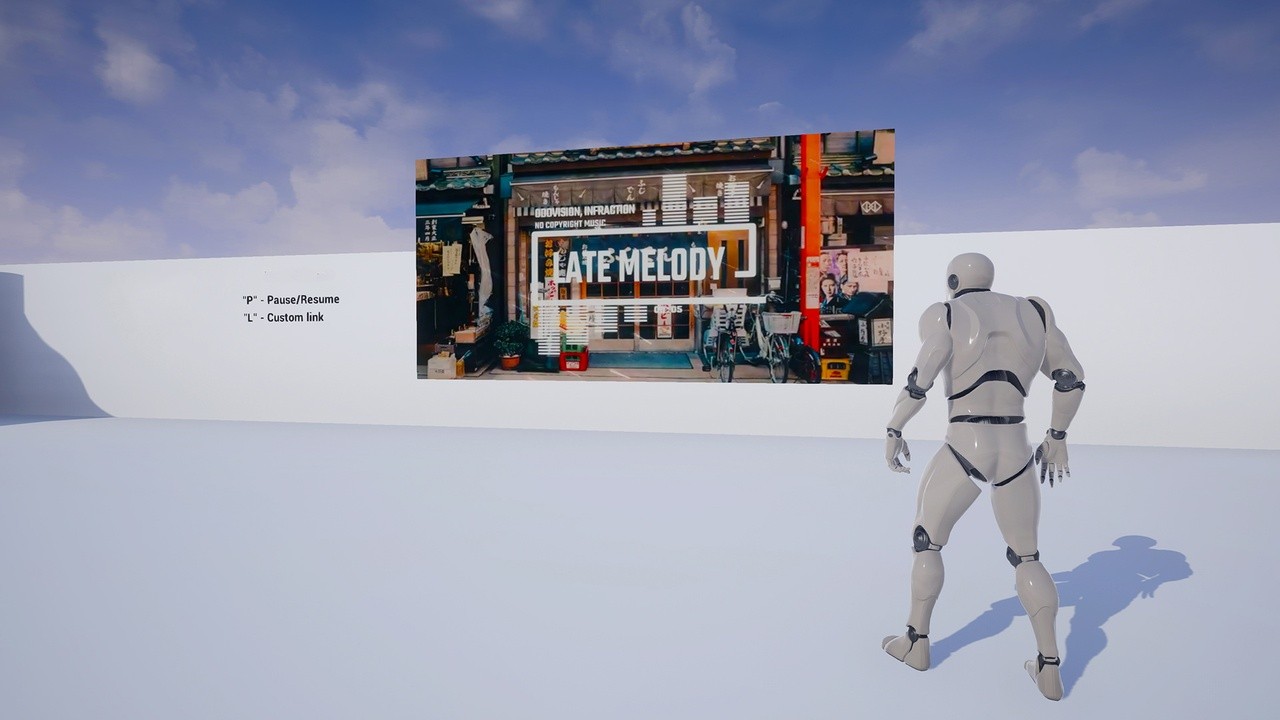
Electra Player in Unreal Engine
Progression-Based NPC Updates
Progression-Based NPC Updates

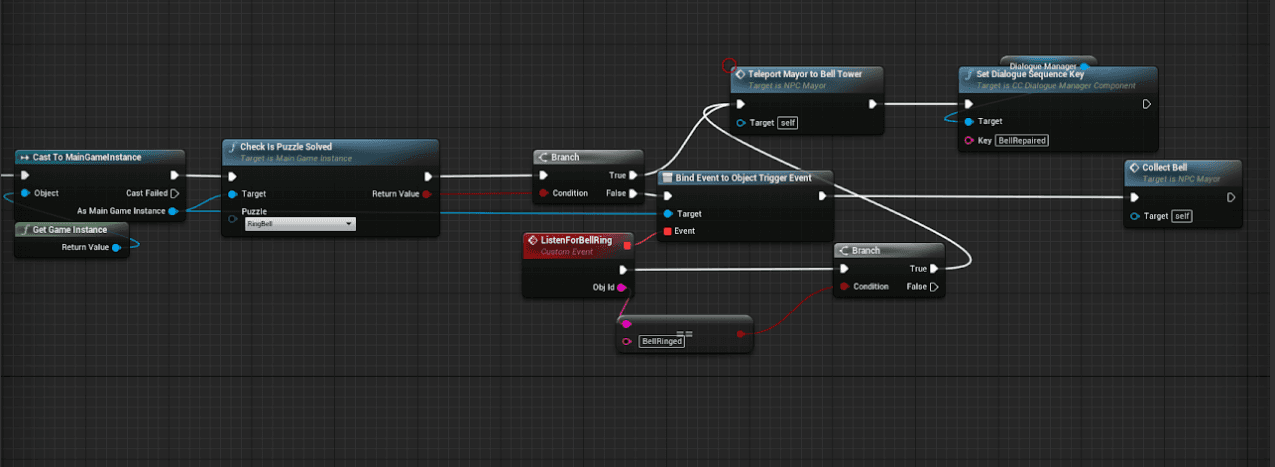
Mayor in the Hub World at Different Player Progression Points
Objective: Make NPCs feel alive by reflecting player progress.
Problem: Without persistence, Switch suspend/resume would reset states → broke immersion.
Constraints: Solo tech designer, memory limits, semi-open world.
Outcome: Seamless NPC state changes across sessions. Delivered emotional payoff + stronger narrative consistency.
Design Process
Design Process
Decide Characters to update
With limited time and being the sole technical designer, I collaborated with narrative to identify the most important NPCs to persistently update. We focused on:
The Mayor – the central quest-giver and narrative anchor.
Pigskin – our team mascot and fan-favorite character.
Secondary NPCs received light updates, such as one-time dialogue swaps or presence toggles, minimizing memory usage while still enhancing immersion.
Decide Characters to update
With limited time and being the sole technical designer, I collaborated with narrative to identify the most important NPCs to persistently update. We focused on:
The Mayor – the central quest-giver and narrative anchor.
Pigskin – our team mascot and fan-favorite character.
Secondary NPCs received light updates, such as one-time dialogue swaps or presence toggles, minimizing memory usage while still enhancing immersion.
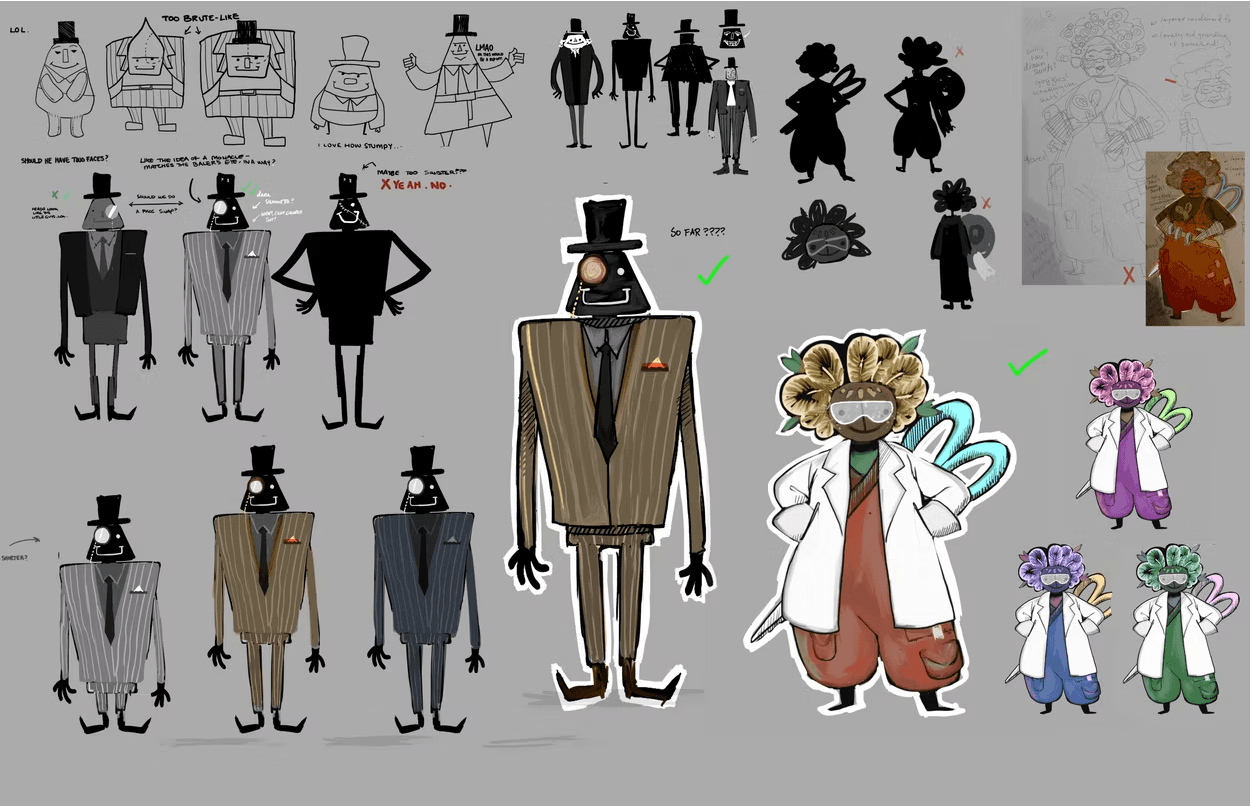
When to Update
Because the game was structured around a semi-open world rather than discrete levels, we couldn’t rely on traditional level-load triggers. I worked with engineering to implement an event messaging system that allowed specific events to “broadcast” when completed—priming other events or NPCs to respond accordingly.
This system enabled:
Seamless updates without manual hard-coding between levels.
Cleaner communication between systems.
Easier scalability as new interactions were added.
When to Update
Because the game was structured around a semi-open world rather than discrete levels, we couldn’t rely on traditional level-load triggers. I worked with engineering to implement an event messaging system that allowed specific events to “broadcast” when completed—priming other events or NPCs to respond accordingly.
This system enabled:
Seamless updates without manual hard-coding between levels.
Cleaner communication between systems.
Easier scalability as new interactions were added.
When to Update
Because the game was structured around a semi-open world rather than discrete levels, we couldn’t rely on traditional level-load triggers. I worked with engineering to implement an event messaging system that allowed specific events to “broadcast” when completed—priming other events or NPCs to respond accordingly.
This system enabled:
Seamless updates without manual hard-coding between levels.
Cleaner communication between systems.
Easier scalability as new interactions were added.
Decide Characters to update
The first step was to understand the characters that needed to be updated. Due to the overall scope and time, we had to limit the characters that would be updated throughout the game. I was the only technical designer so it was up to me to implement it and after talking to narrative, I convinced them that we could do two characters that were persistently updated while the rest could have a little bit. This resulted in the Mayor character being chosen as he would serve as a connecting factor for taking care of the town and Pigskin which was our team's mascot.
To visualize dependencies and catch potential gaps, I mapped out the full event chain using Miro. This allowed me to:
Quickly see which events triggered others.
Identify broken or missing links when we had to cut content.
Streamline the update process by planning before diving into Blueprint.
This mapping process saved significant time in late-stage development, allowing us to make fast, informed changes without destabilizing other systems.
To visualize dependencies and catch potential gaps, I mapped out the full event chain using Miro. This allowed me to:
Quickly see which events triggered others.
Identify broken or missing links when we had to cut content.
Streamline the update process by planning before diving into Blueprint.
This mapping process saved significant time in late-stage development, allowing us to make fast, informed changes without destabilizing other systems.
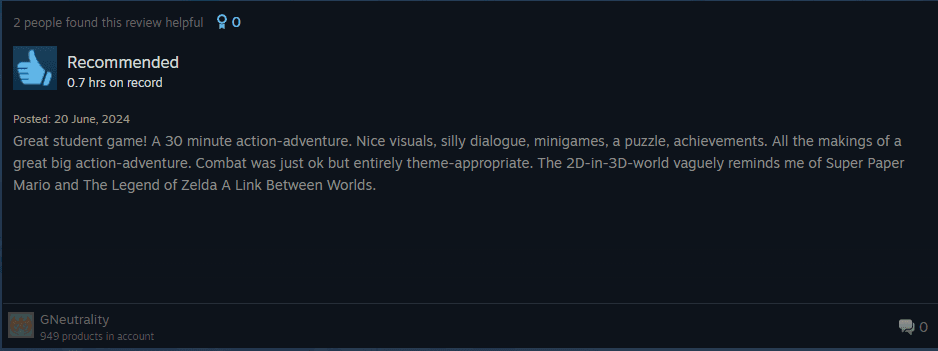
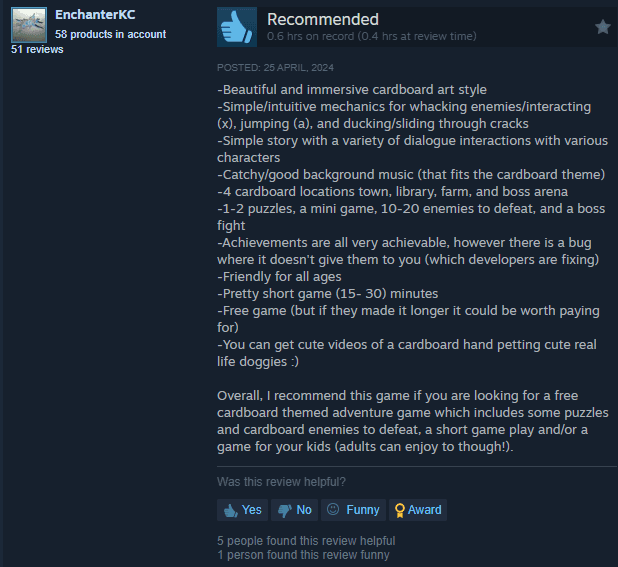
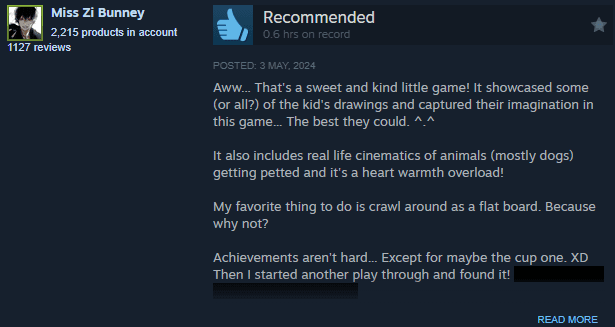
Reviews
Reviews
Reviews
Platforms
Steam/Nintendo Switch
Role
Design Lead/Technical Designer
Design Lead/Technical Designer
Duration
6 Months
Team Size
13 People
similar work
Cardboard Chronicles
overview
Role
Design Lead/ Technical Designer
Engine
Unreal Engine 4.27/5
Duration
6 months
Team Size
13 People
Platforms