
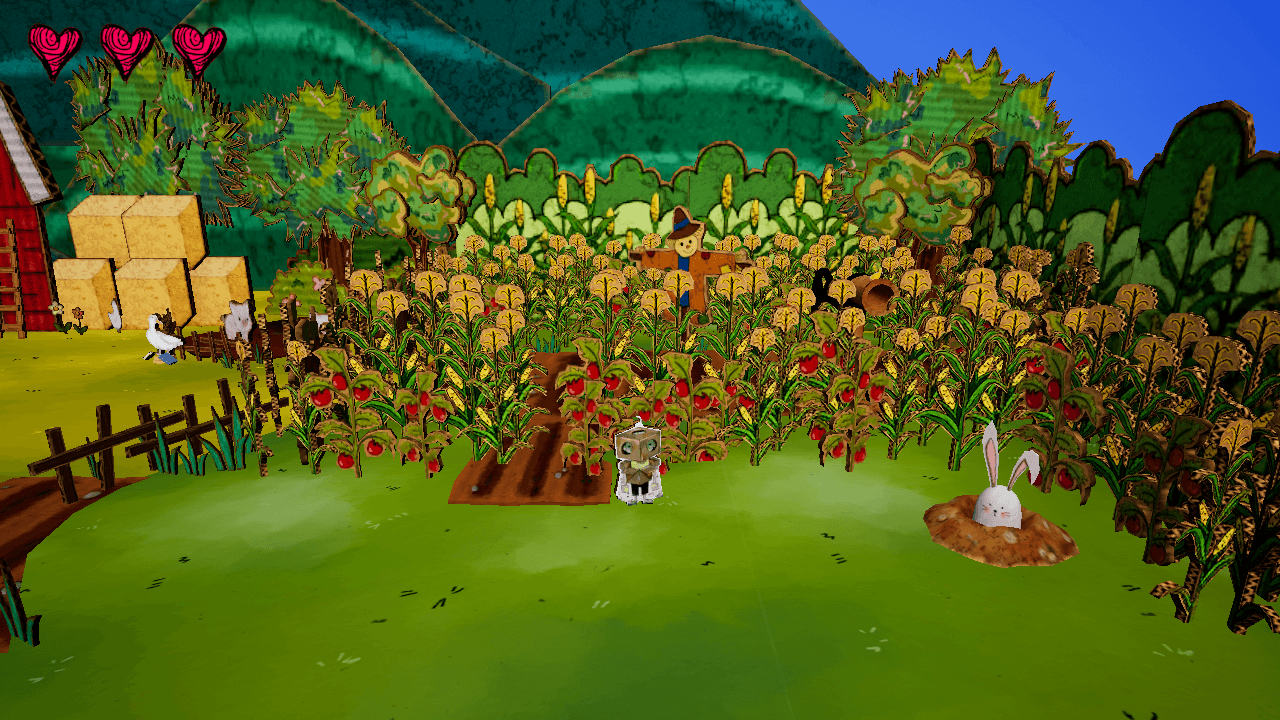

Cutscene System
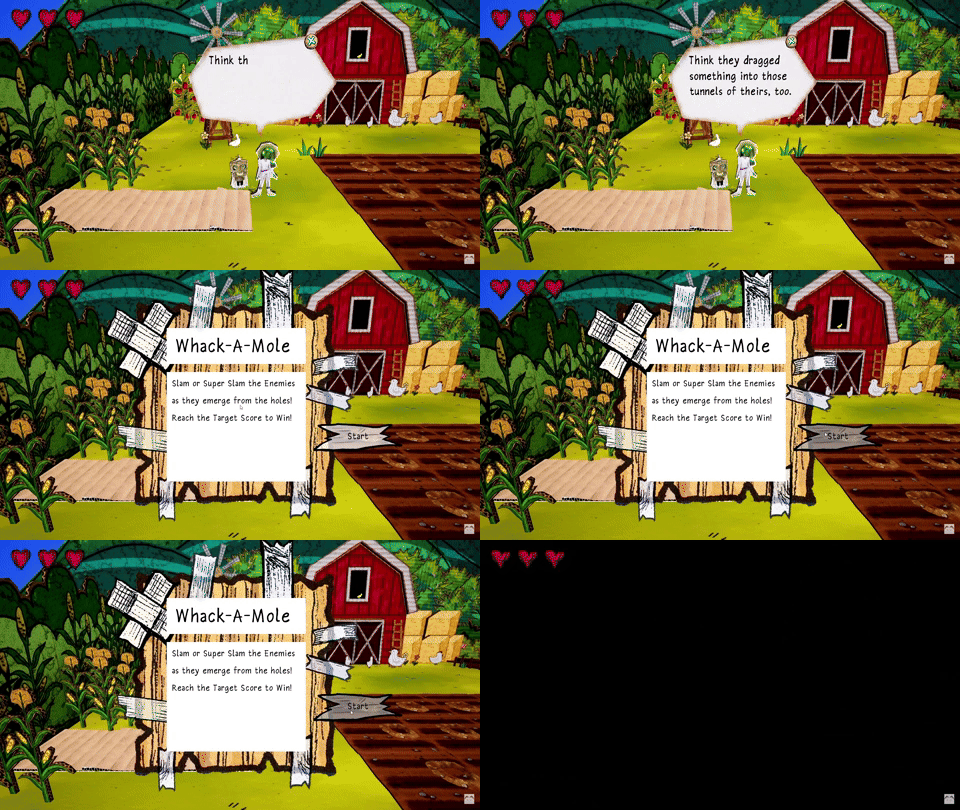
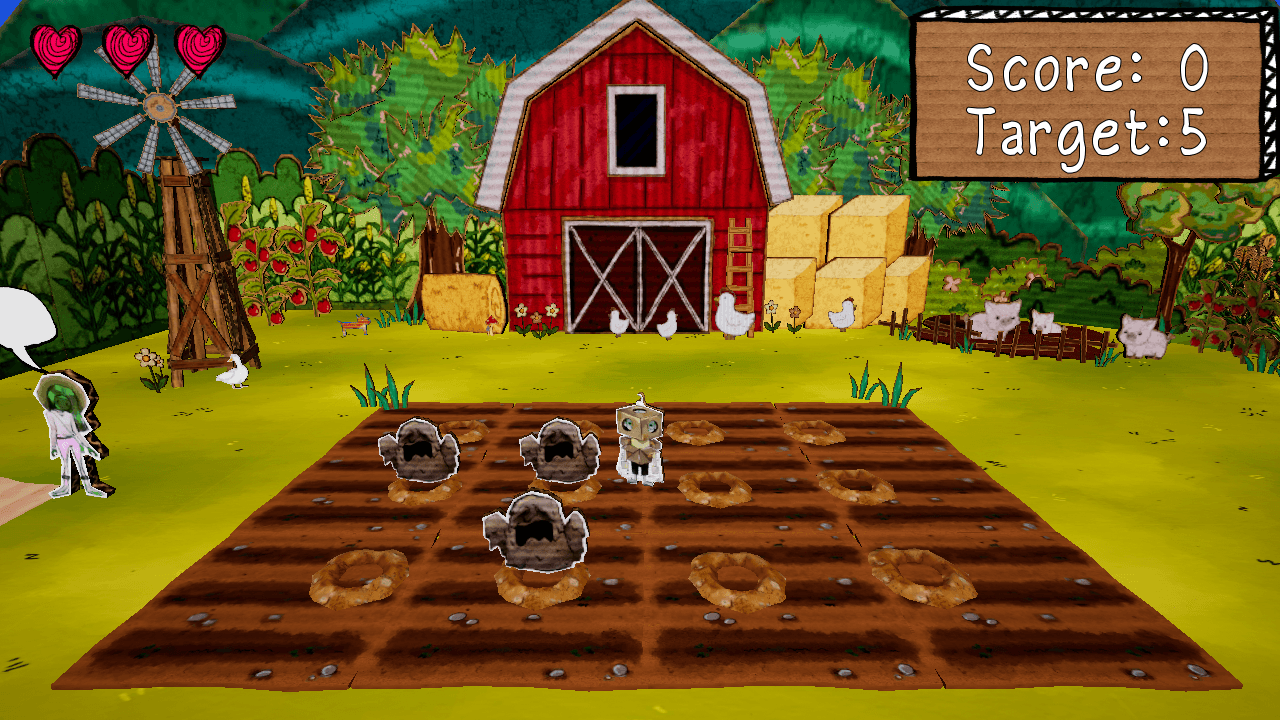
Whack - A- Mole and Health UI

Cutscene Implementation and Changes Based on Whack A Mole System
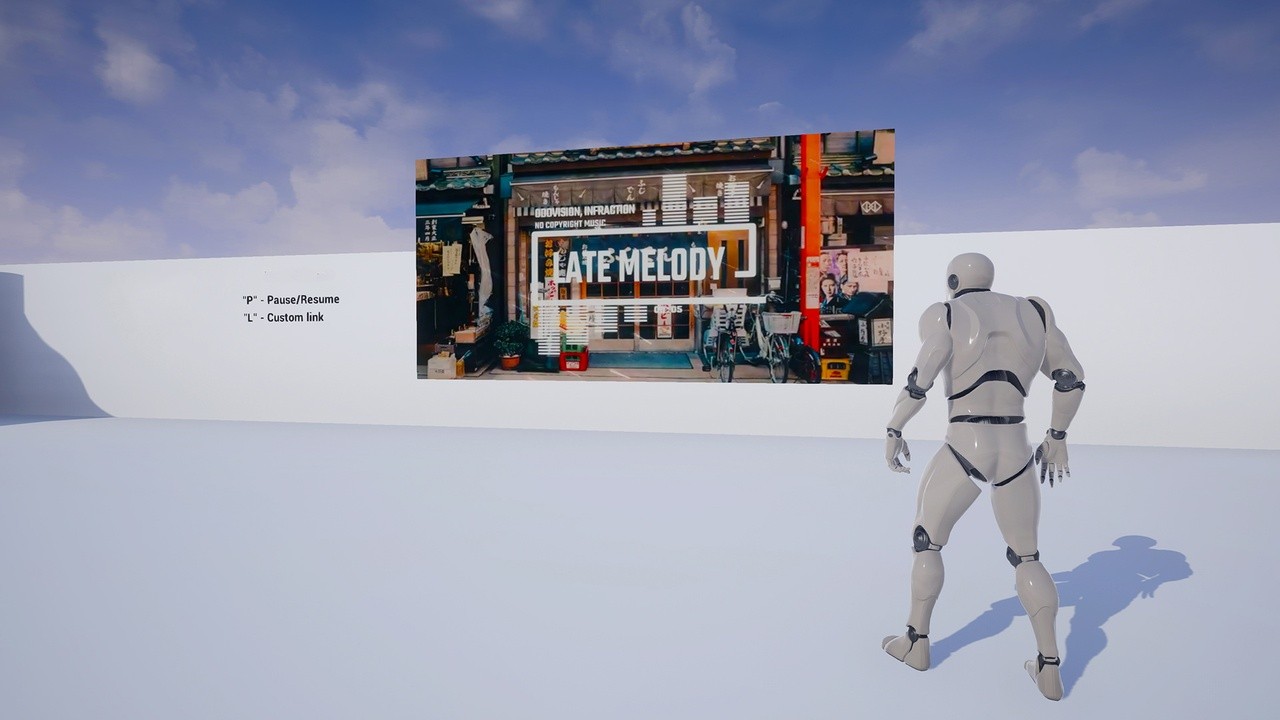
Flexible FMV Cutscene System
Built a video playback system with skip detection.
Reasoning: Animation resources were stretched thin, so I used FMVs to deliver cutscenes and playful moments (like dog-petting) without extra rigging or animation.
Tradeoff: Sacrificed custom animations, but gained a reusable, scalable pipeline that worked across cutscenes and Nintendo Switch hardware.
Dynamic NPC Interactions
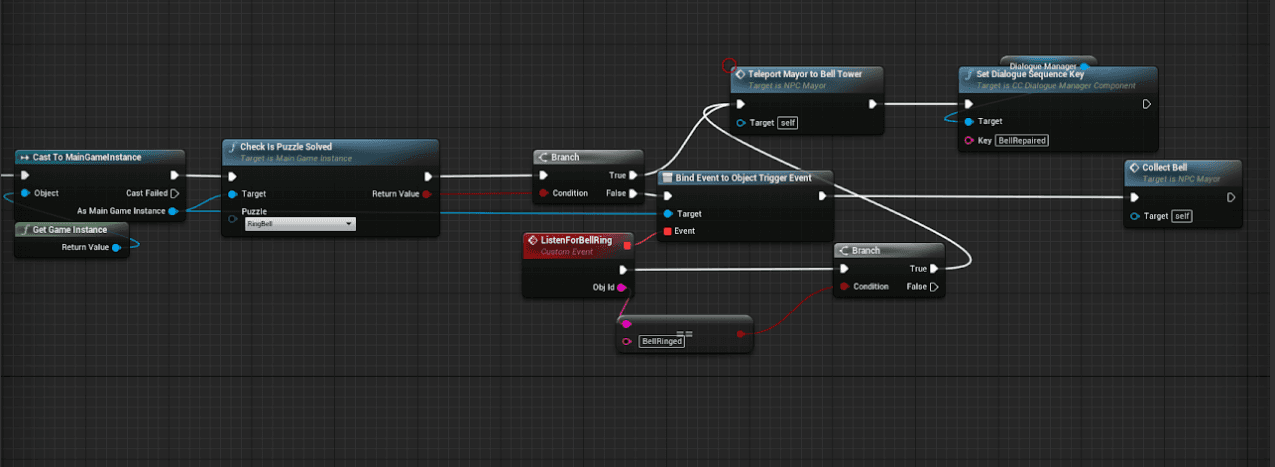
Designed interaction logic for 11 NPCs that updated with player progress.
Reasoning: Static dialogue felt dead, so I pushed for persistence systems that showed growth and reinforced the narrative theme of “impact on the world.”
Tradeoff: Couldn’t update every NPC, so I prioritized the Mayor and Pigskin (high narrative + emotional payoff).
Narrative-Heavy Town Center Area
Owned the hub’s dialogue trees, progression checks, and character positioning.
Reasoning: The town was the emotional anchor of the game, so I ensured pacing felt natural and story progression never conflicted with gameplay states.
Tradeoff: Required cutting a more ambitious time-loop system, but resulted in a tighter, more accessible player experience.
Integrating Puzzle, Dialogue, and Combat Systems
Unified different systems into a smooth, yet exciting flow
Reasoning: To make use of all the systems, they needed to communicate with each other which I did through Blueprints
Tradeoff: Some parts had to be more linear than others especially for bigger story moments.
Created UI Systems for Health and Mini-Games
Created a flipbook-based health bar and a Whack-a-Mole mini-game interface.
Reasoning: A flat, stylized UI matched the cardboard aesthetic and was easier to implement than 3D widgets, giving us more time to polish mechanics.
Tradeoff: Less flashy than a 3D UI, but aligned perfectly with theme + scope.

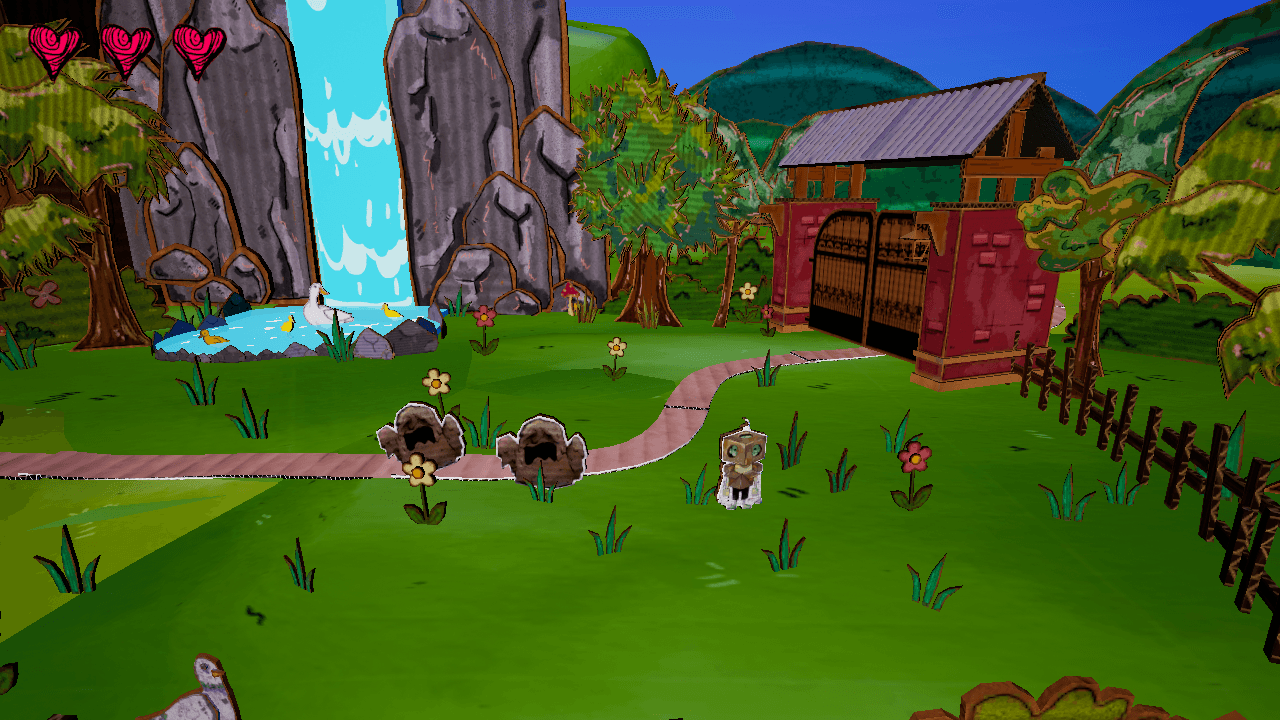
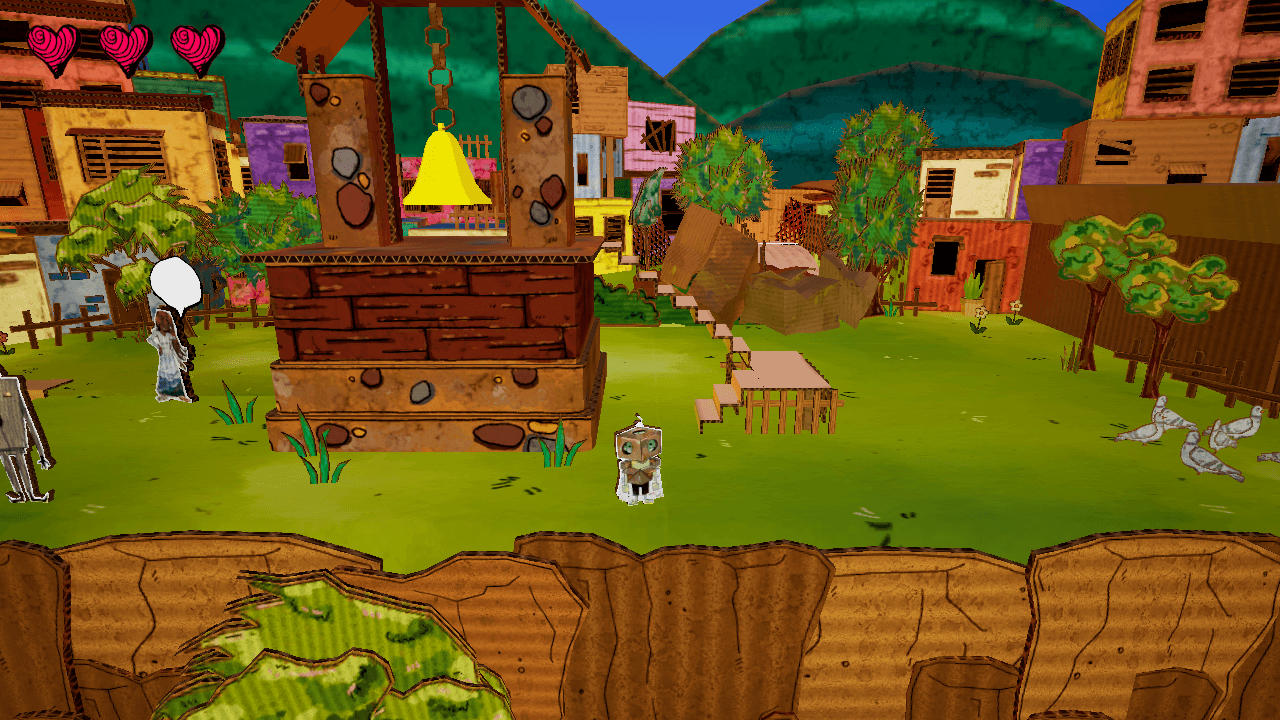
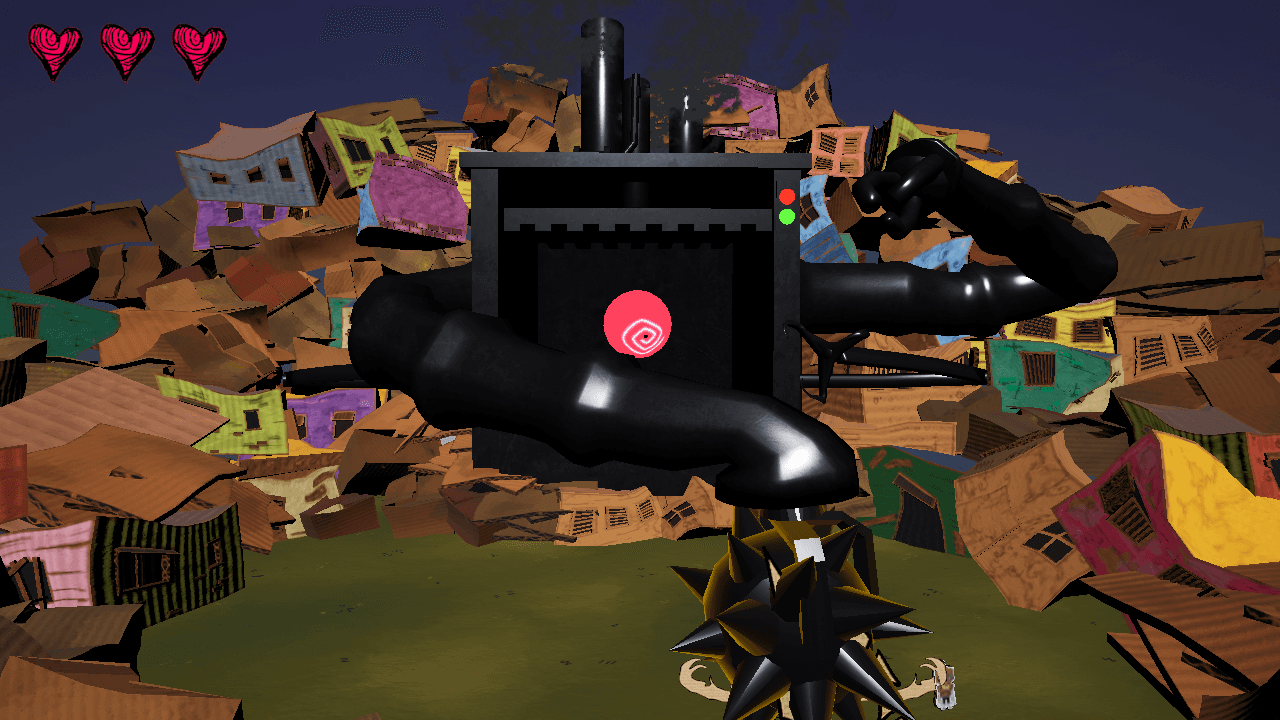
Major Areas in Final Game
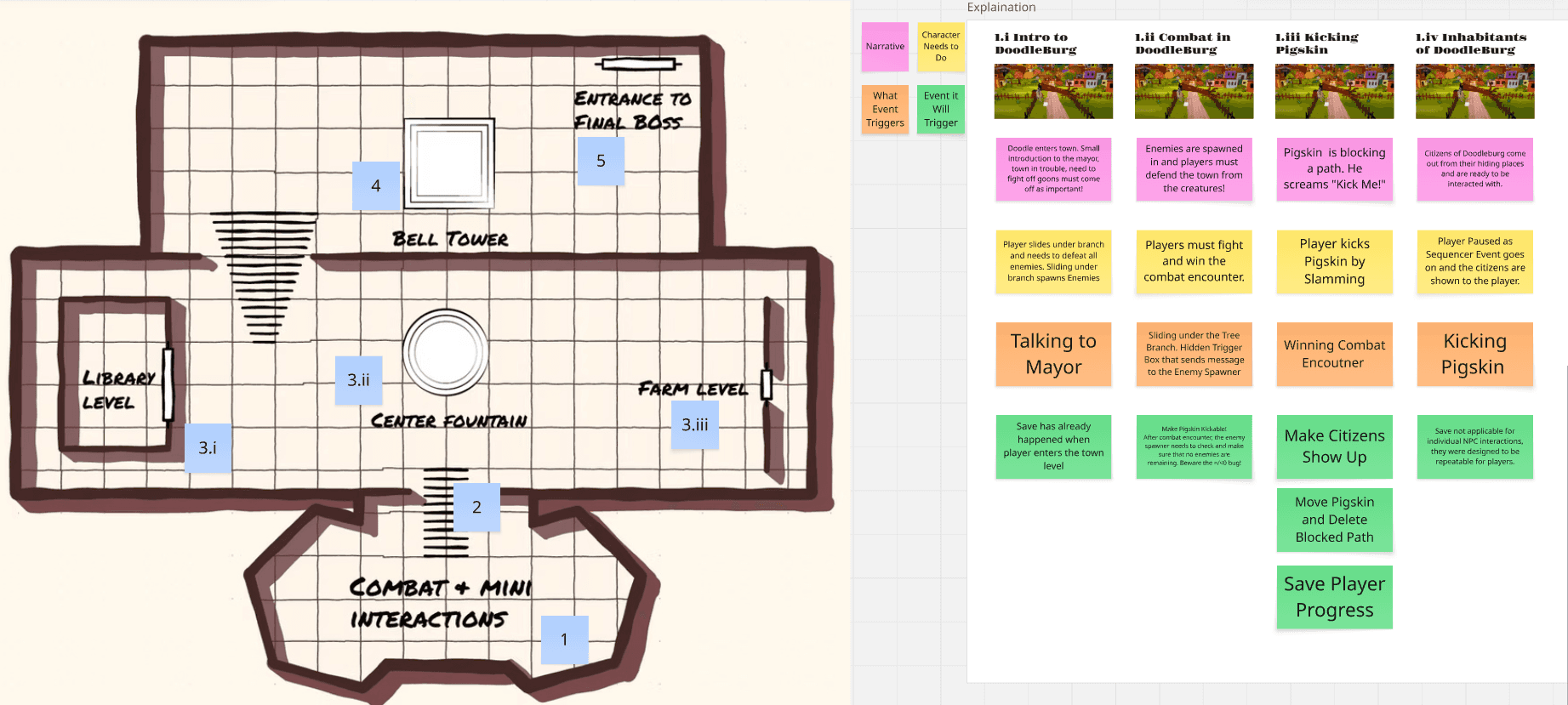
Level Breakdowns
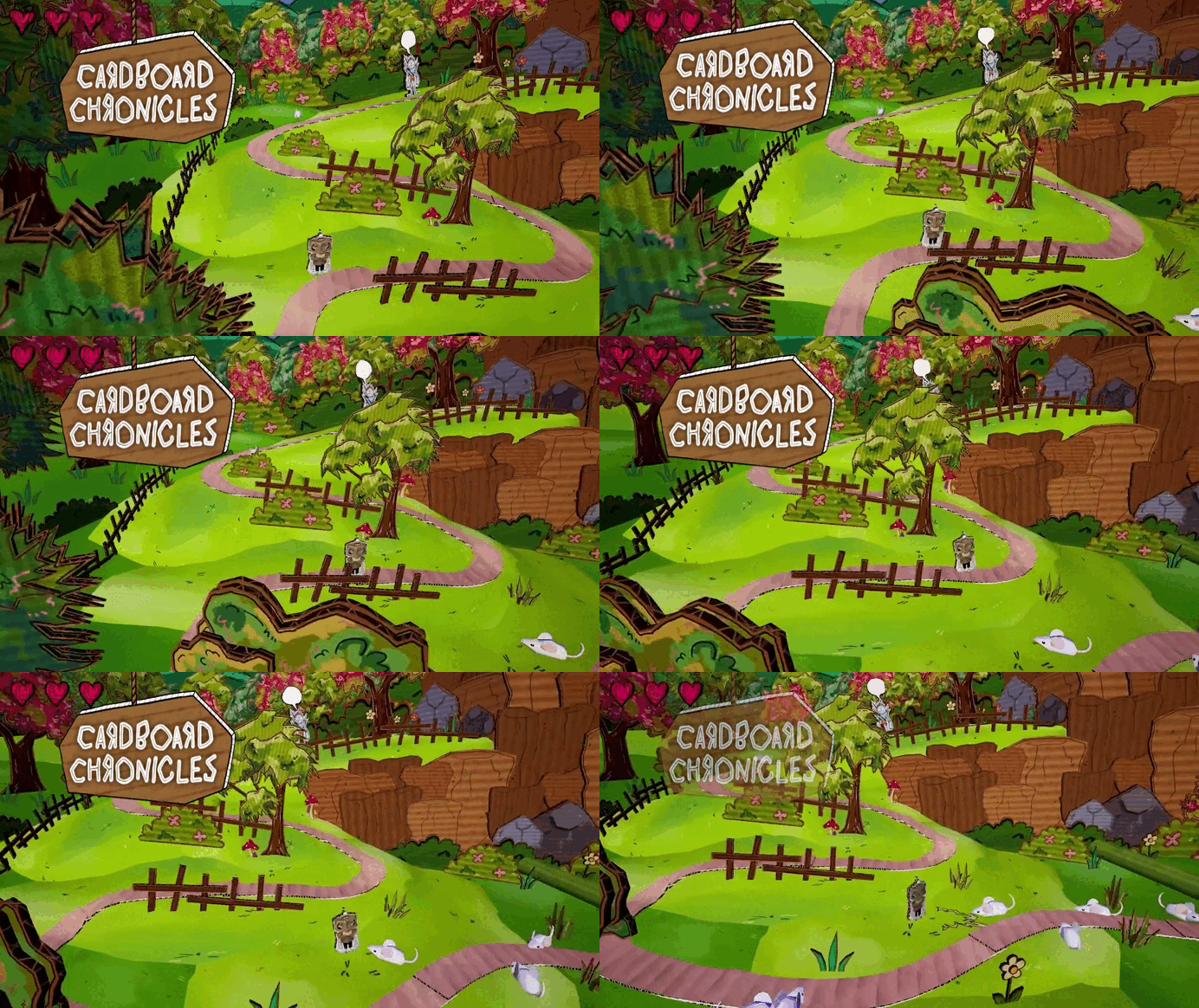
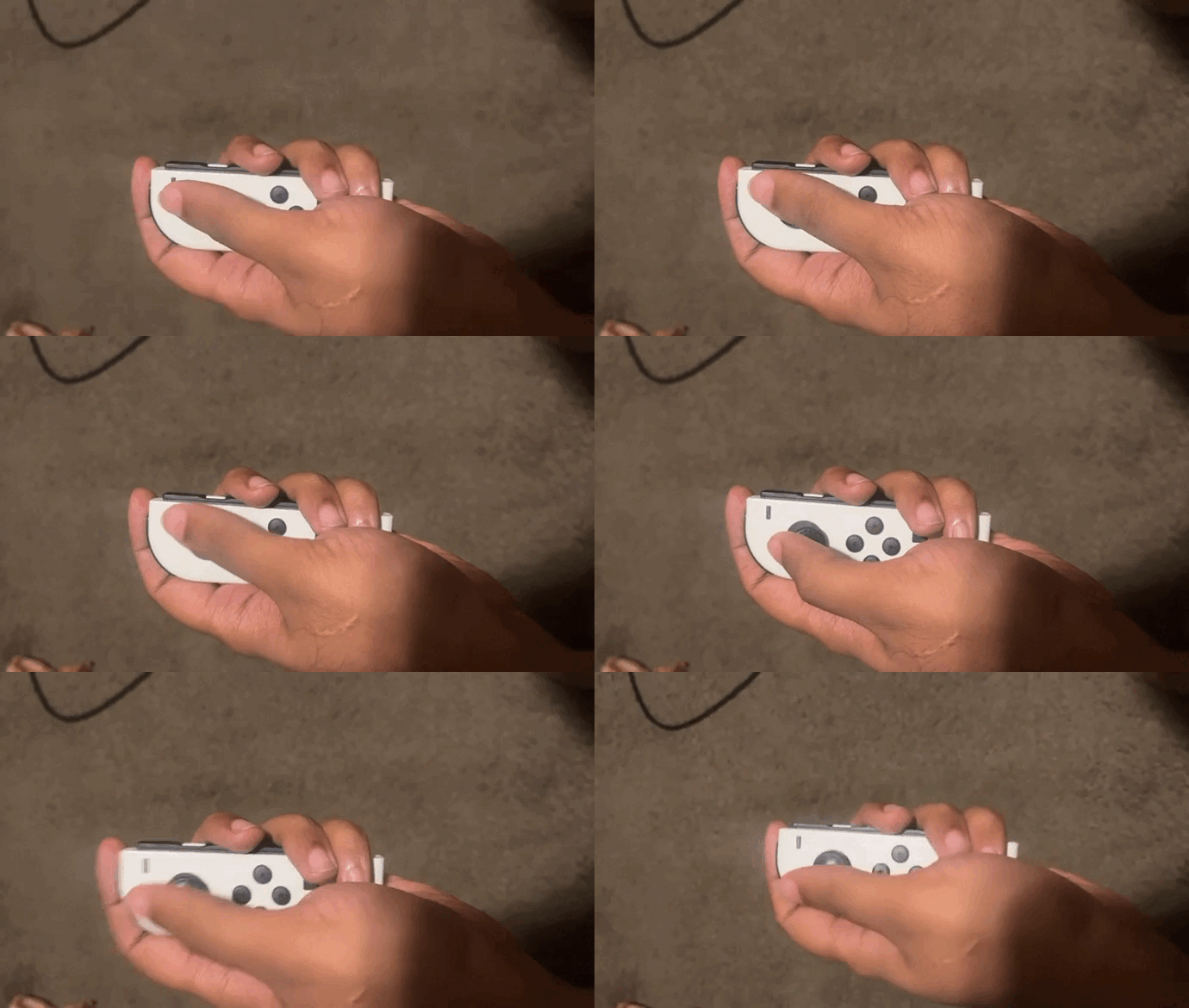
Joy-Con Interactions are Introduced
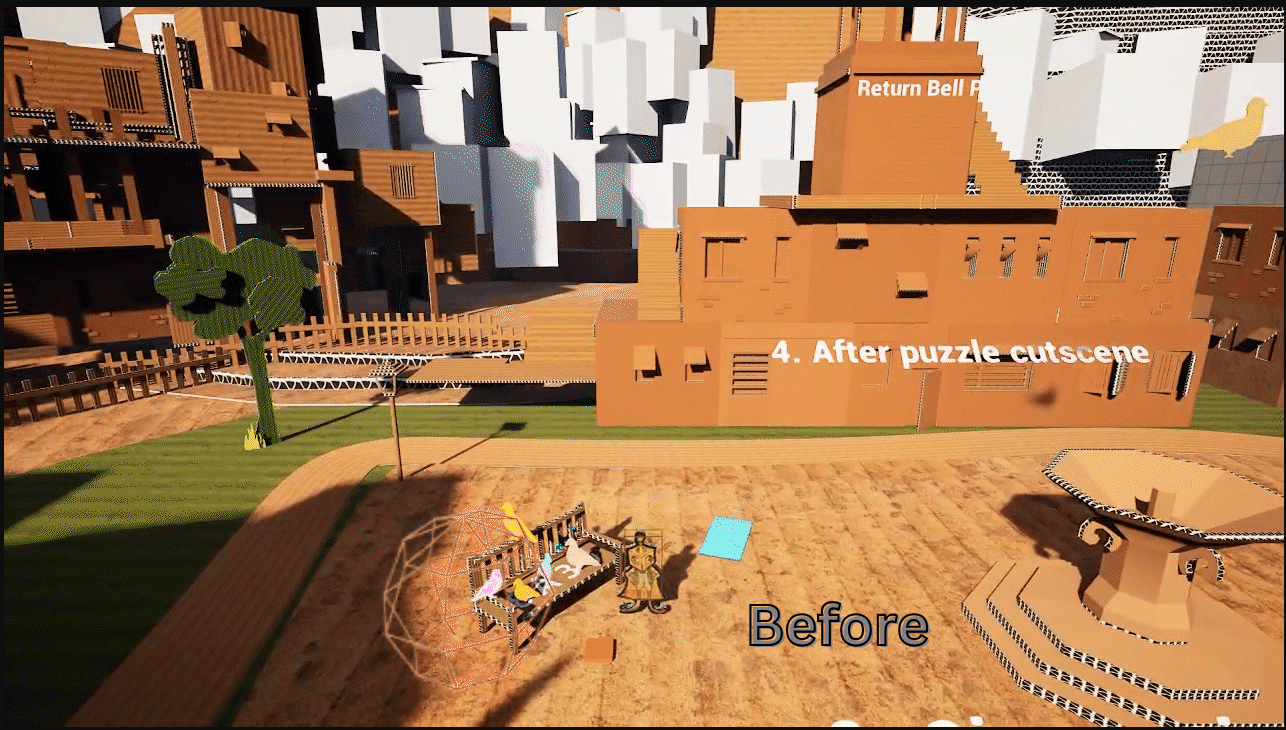
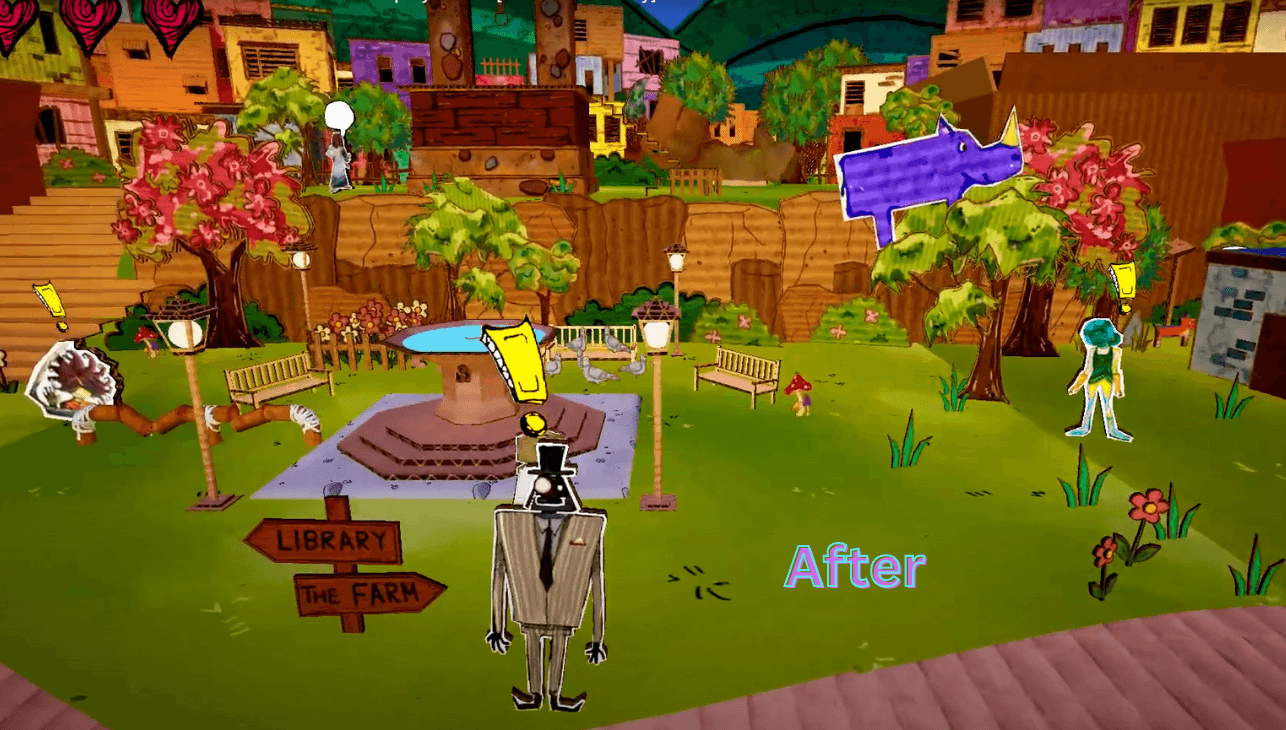
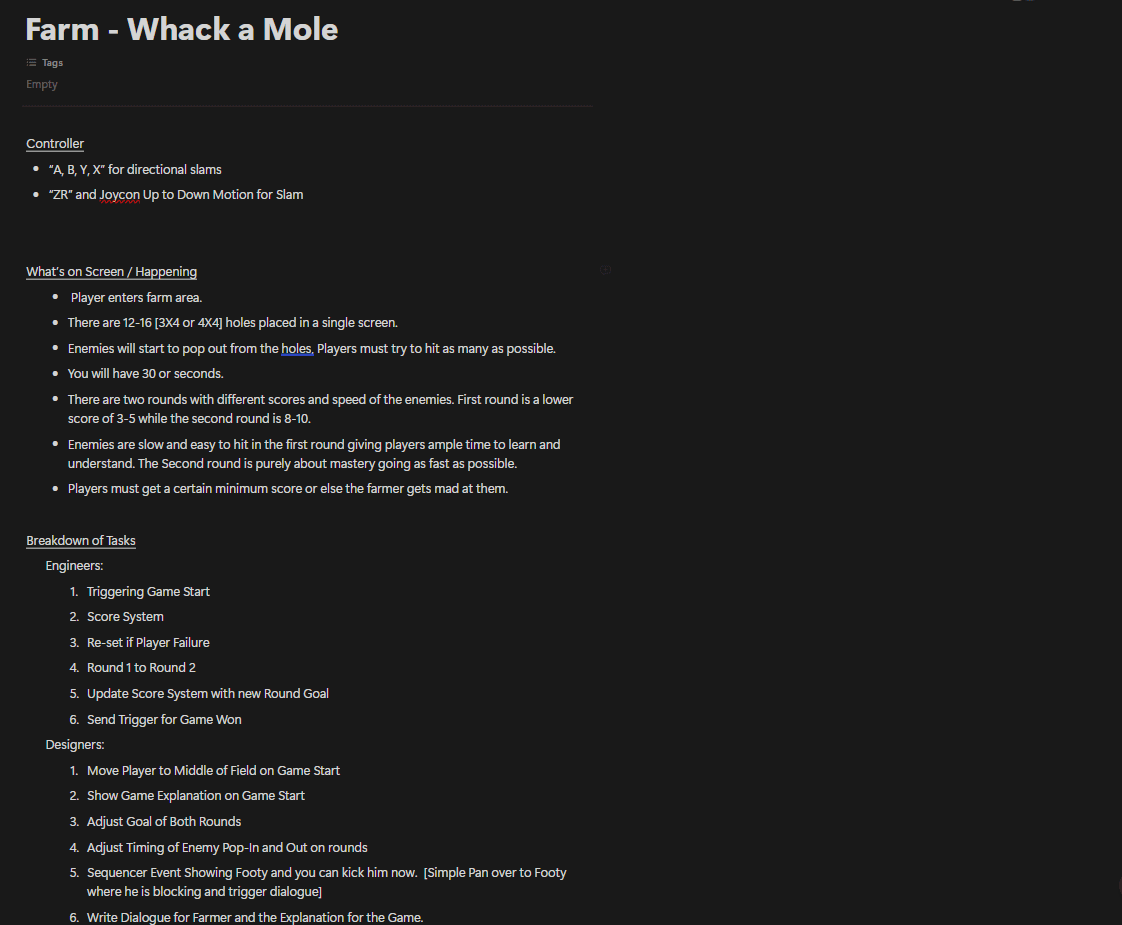
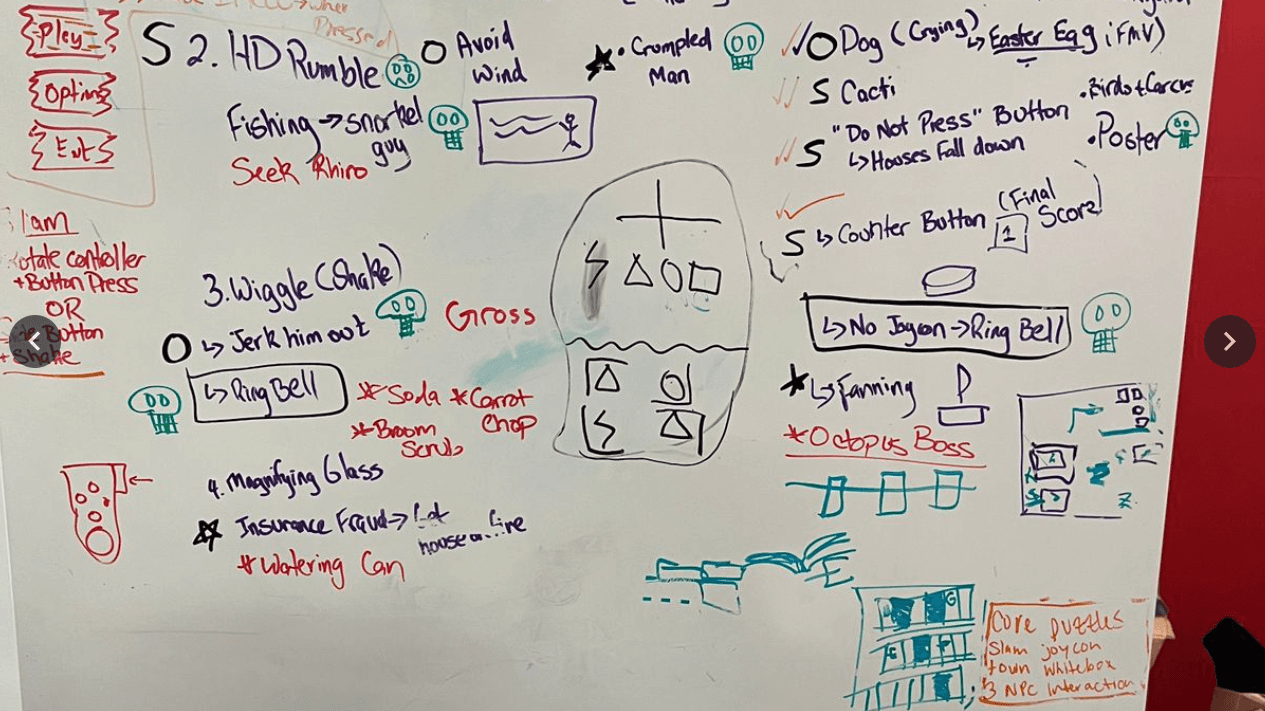
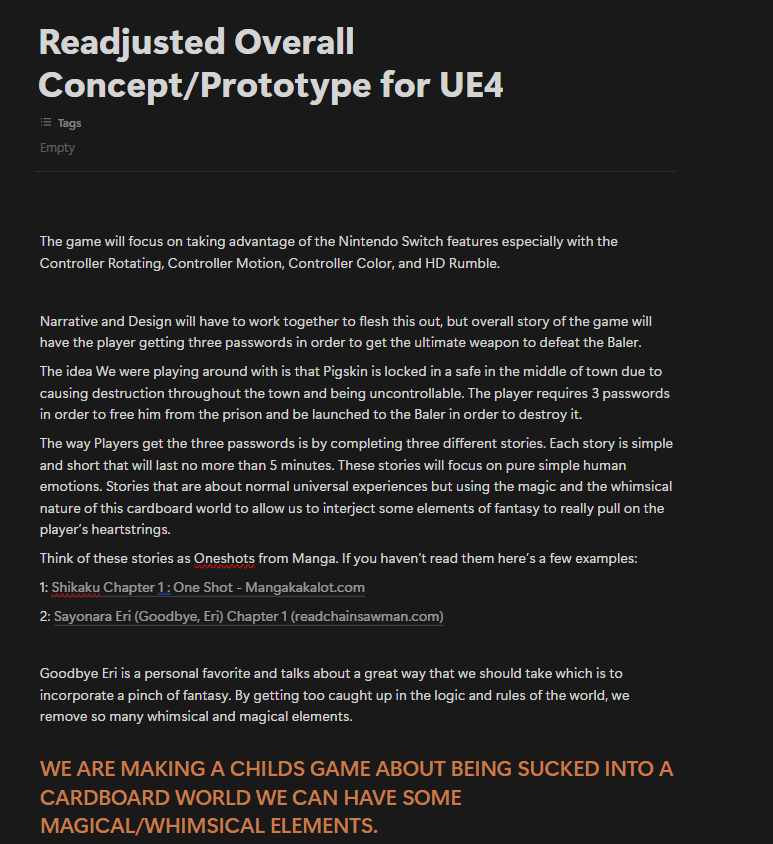
Objective
Transform a bloated, disjointed thesis project into a focused, shippable game for Nintendo Switch.
Observed Issues
Scope creep: 5 worlds planned, only 3 partially complete by semester end.
Fragmented mechanics: no synergy, “prototype soup” without a unifying vision.
Team friction: design vs. engineering priorities clashing, slowing progress.
Lack of identity: project was ambitious but didn’t have a strong creative core.
Restraints
Limited dev time (engine downgrade UE5 → UE4.27 cut schedule nearly in half).
Large team of 13 students with varying skill levels.
Nintendo Switch hardware limitations.
Proposed Solution
Cut scope → reduce from 5 worlds to 2 levels + 1 hub.
Establish a “smaller world, denser design” philosophy (inspired by Yakuza 0).
Prioritize mechanics that playtesters enjoyed (Joy-Con interactions, NPC persistence).
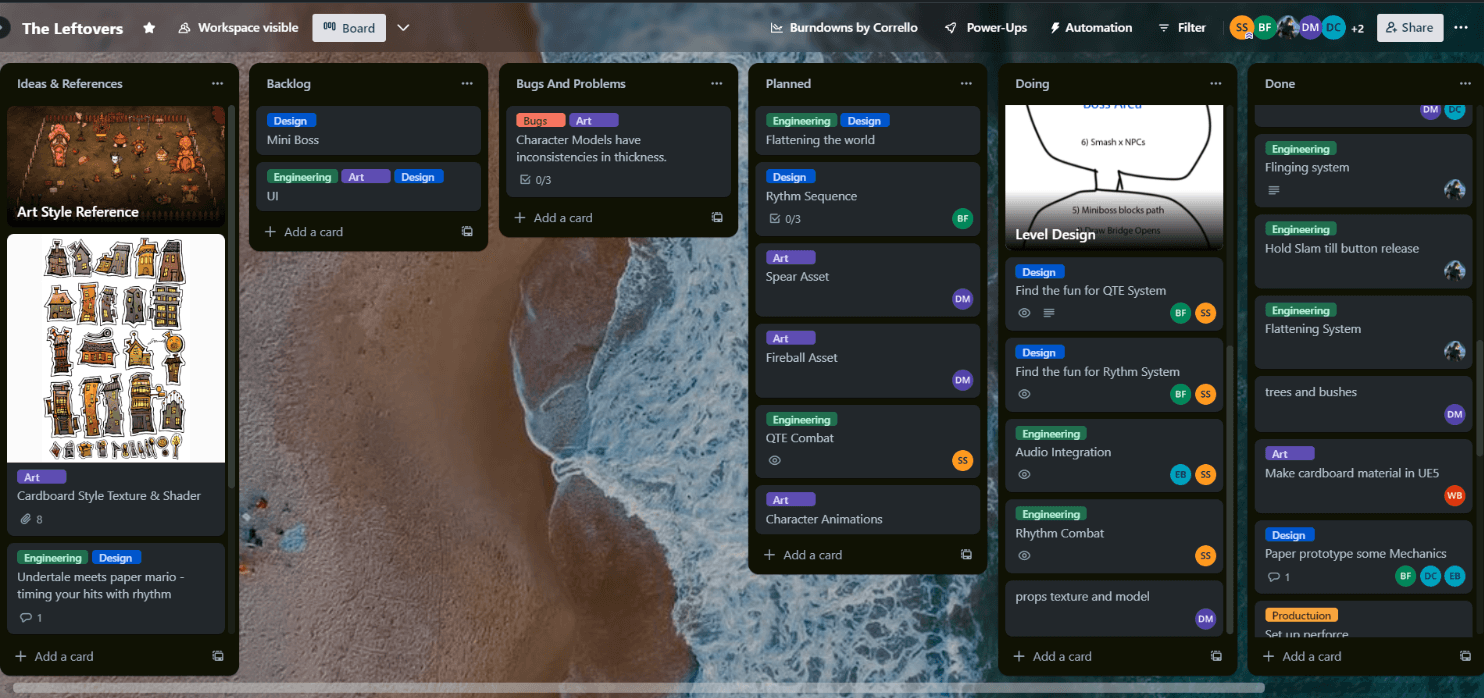
Introduce clear pipelines + documentation to resolve design/engineering friction.
Position hub town as emotional anchor to unify story + gameplay. Progress was slow, and the project lacked a clear identity or achievable scope.
Outcome
Team was re-energized → clearer vision, achievable scope, reduced friction.
Production regained momentum, morale improved after cuts clarified direction.
Created a roadmap that shipped successfully on Nintendo Switch.
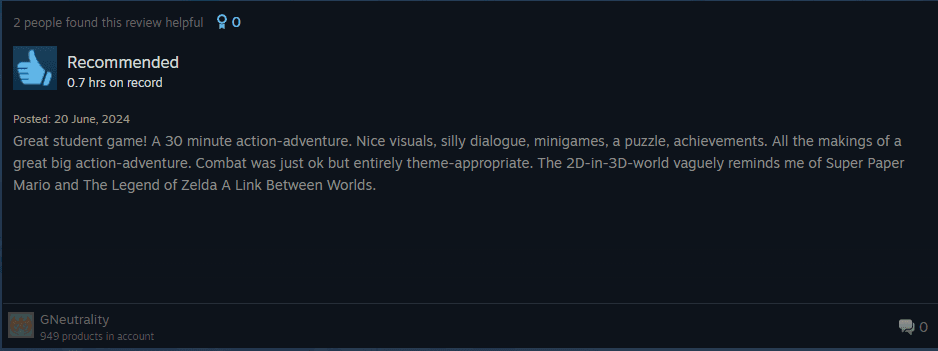
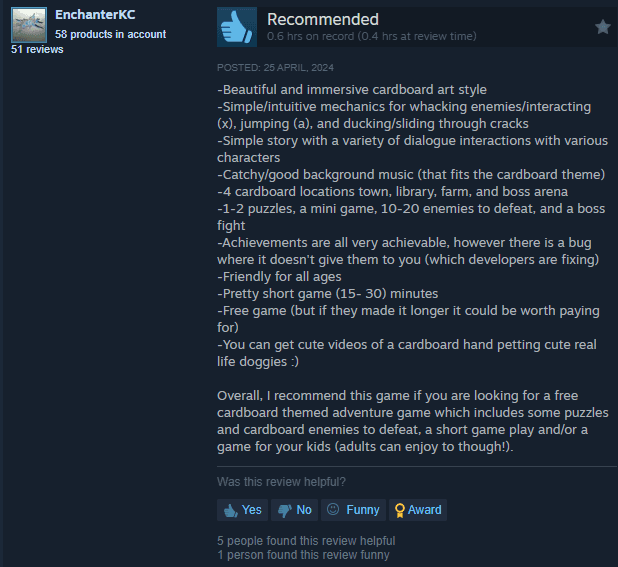
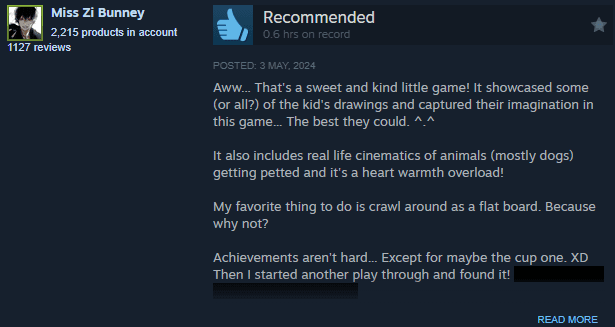
Recruiters & players praised “dog-petting FMV” and NPC persistence — features that only existed because of the redesign.
assessing what we had
The Switch dev kit arrived, requiring us to shift engines from UE5 to UE 4.2. This transition gave us a natural pause to reassess.
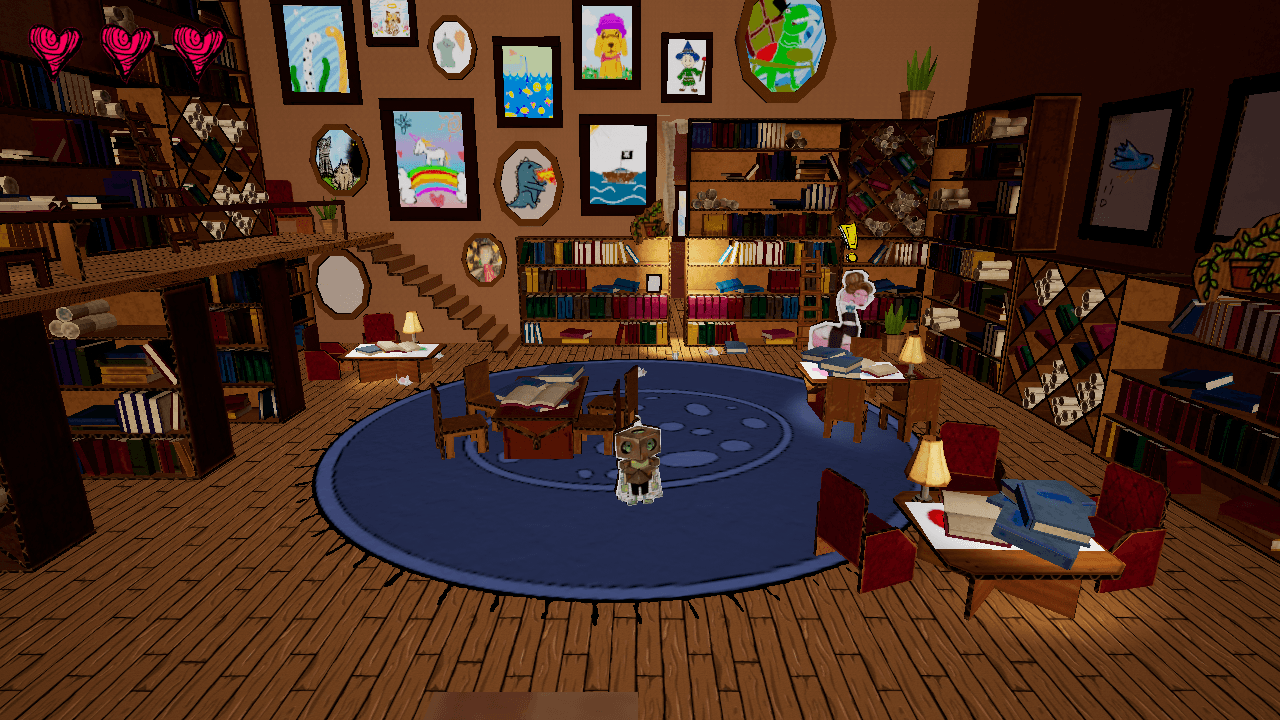
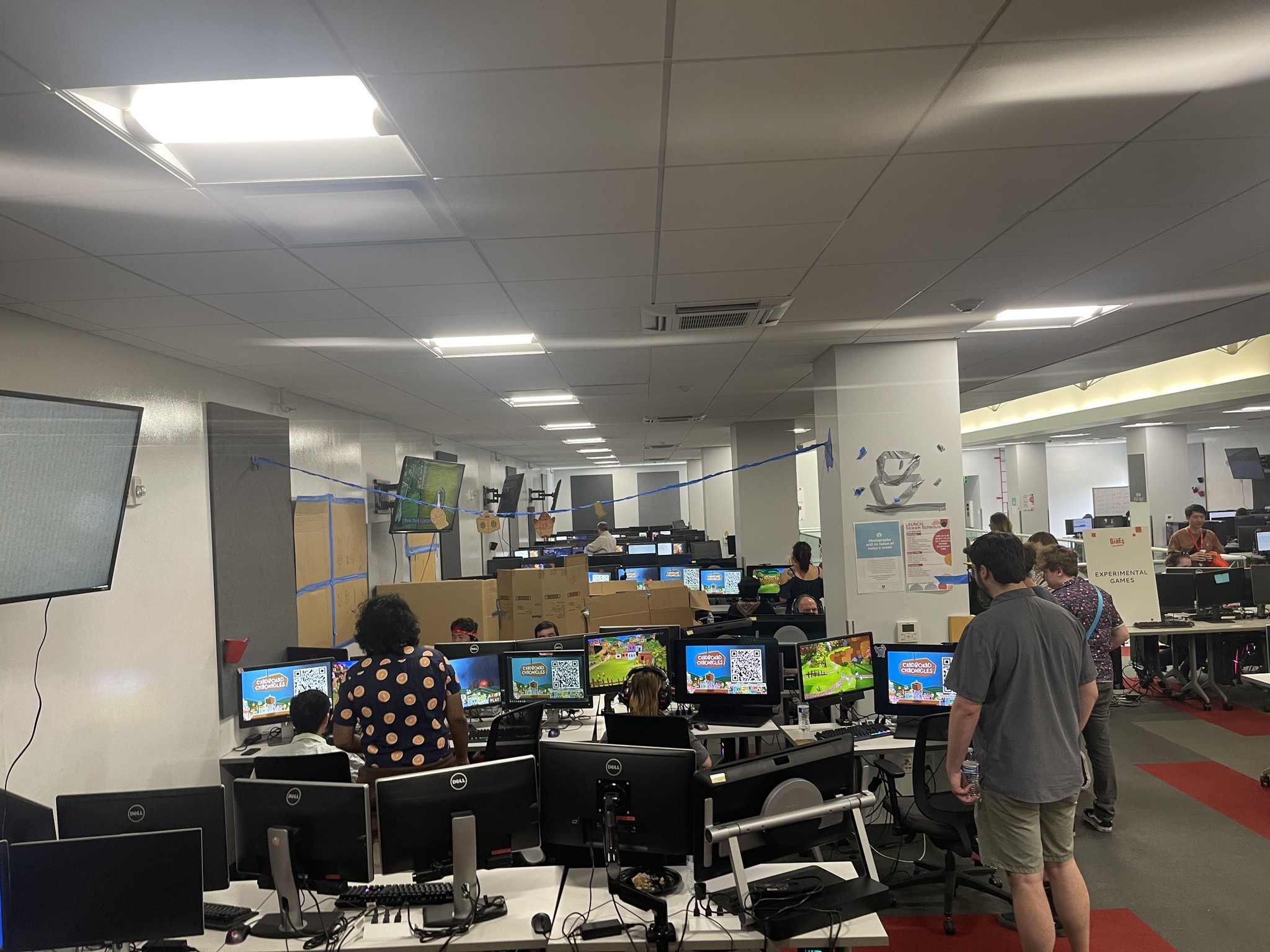
I cataloged existing mechanics and narrative content and reviewed our “mechanics gym”—a test map containing all working interactions. We had some promising prototypes but no clear way they fit together.
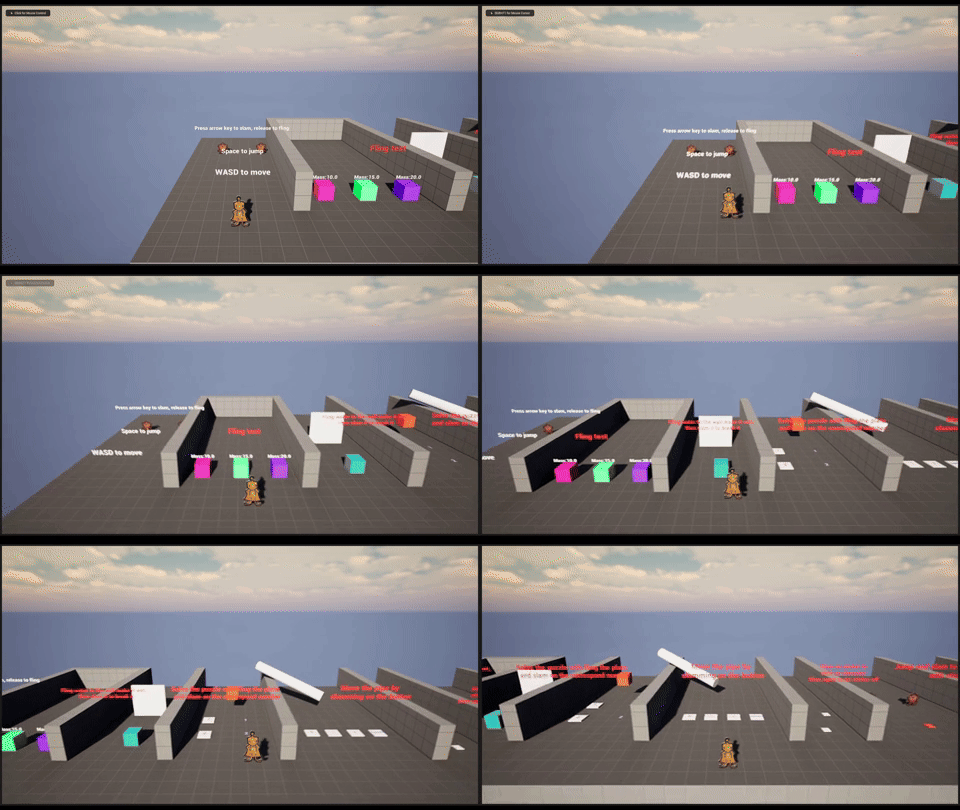
Gym with all of our mechanics


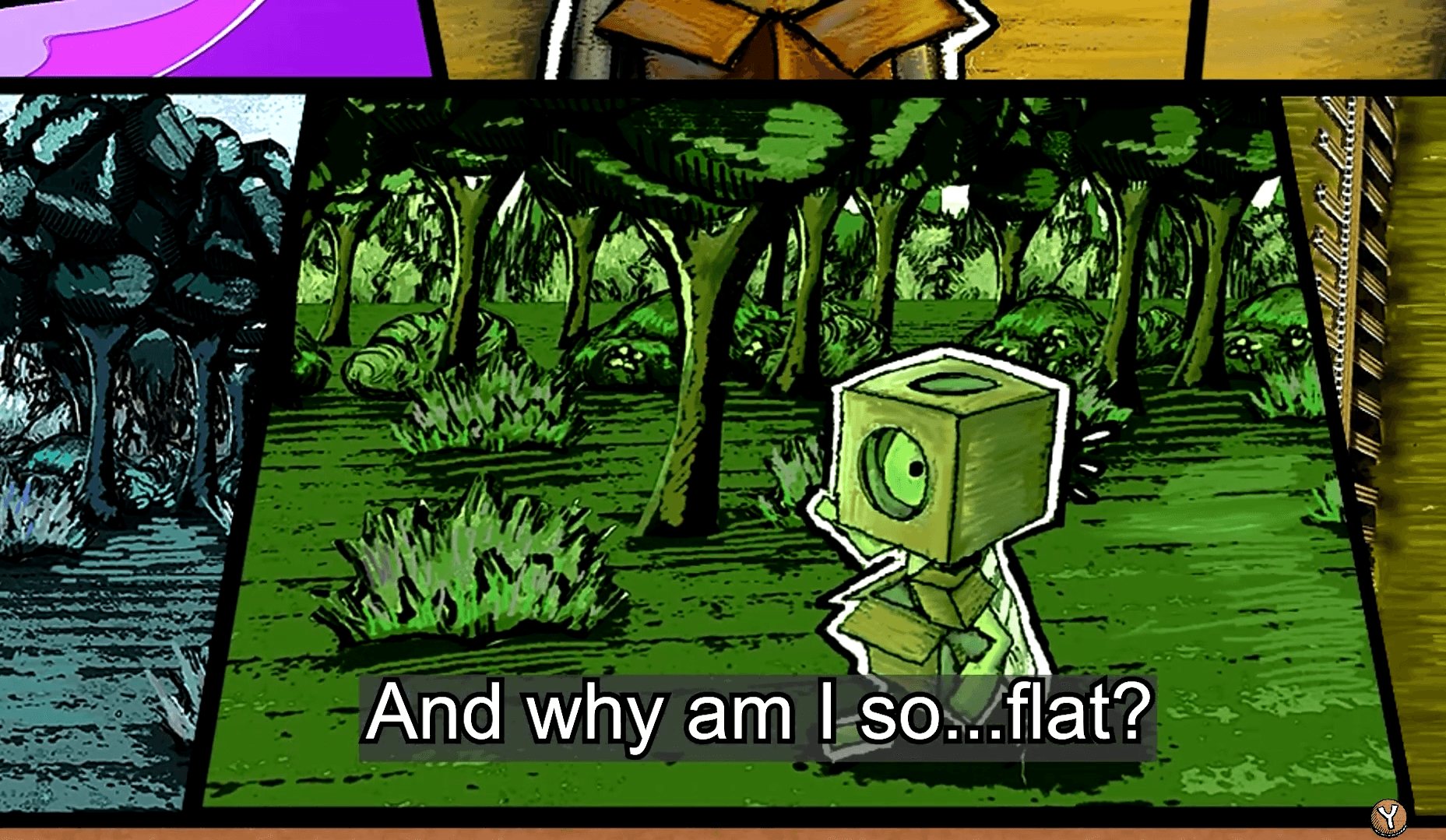
Objective: Deliver cutscenes that added humor and warmth without relying on resource-intensive custom animation.
Observed Issue: Animation team had no bandwidth for complex cutscenes, and Switch hardware created stability challenges
Restraints: Limited animation resources, Switch hardware playback quirks, need for skip functionality.
Proposed Solution: Create a reusable FMV pipeline that could power both cutscenes and playful moments.
Outcome: Shipped scalable FMV system for both cutscenes & humor beats. Memorable “dog-petting FMV” became a playtester favorite.

Electra Player in Unreal Engine

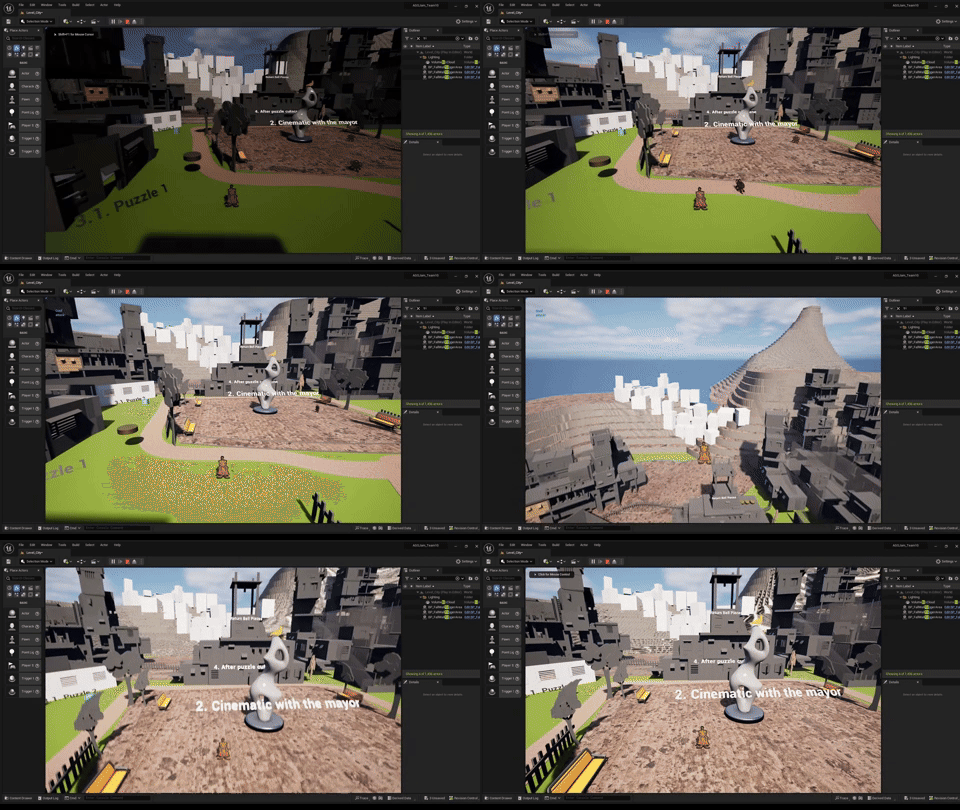
Mayor in the Hub World at Different Player Progression Points
Objective: Make NPCs feel alive by reflecting player progress.
Problem: Without persistence, Switch suspend/resume would reset states → broke immersion.
Constraints: Solo tech designer, memory limits, semi-open world.
Outcome: Seamless NPC state changes across sessions. Delivered emotional payoff + stronger narrative consistency.
Platforms
Steam/Nintendo Switch
Role
Duration
6 Months
Team Size
13 People
similar work